A Tale Of Two Cities

A Tale of Two Cities differs essentially from all of Dickens' other novels in style and manner of treatment. Forster, in his 'Life of Dickens,' writes that "there is no instance in his novels excepting this, of a deliberate and planned departure from the method of treatment which had been pre-eminently the source of his popularity as a novelist." To rely less upon character than upon incident, and to resolve that his actors should be expressed by the story more than they should express themselves by dialogue, was for him a hazardous, and can hardly be called an entirely successful, experiment. With singular dramatic vivacity, much constructive art, and with descriptive passages of a high order everywhere, there was probably never a book by a great humorist, and an artist so prolific in conception, with so little humor and so few remarkable figures. Its merit lies elsewhere. The two cities are London and Paris. The time is just before and during the French Revolution. A peculiar chain of events knits and interweaves the lives of a "few simple, private people" with the outbreak of a terrible public event. Dr. Manette has been a prisoner in the Bastille for eighteen years, languishing there, as did so many others, on some vague unfounded charge. His release when the story opens, his restoration to his daughter Lucie, the trial and acquittal of one Charles Darnay, nephew of a French marquis, on a charge of treason, the marriage of Lucie Manette to Darnay,— these incidents form the introduction to the drama of blood which is to follow. Two friends of the Manette family complete the circle of important characters: Mr.

Über dieses Buch

A Tale of Two Cities differs essentially from all of Dickens' other novels in style and manner of treatment. Forster, in his 'Life of Dickens,' writes that "there is no instance in his novels excepting this, of a deliberate and planned departure from the method of treatment which had been pre-eminently the source of his popularity as a novelist." To rely less upon character than upon incident, and to resolve that his actors should be expressed by the story more than they should express themselves by dialogue, was for him a hazardous, and can hardly be called an entirely successful, experiment. With singular dramatic vivacity, much constructive art, and with descriptive passages of a high order everywhere, there was probably never a book by a great humorist, and an artist so prolific in conception, with so little humor and so few remarkable figures. Its merit lies elsewhere. The two cities are London and Paris. The time is just before and during the French Revolution. A peculiar chain of events knits and interweaves the lives of a "few simple, private people" with the outbreak of a terrible public event. Dr. Manette has been a prisoner in the Bastille for eighteen years, languishing there, as did so many others, on some vague unfounded charge. His release when the story opens, his restoration to his daughter Lucie, the trial and acquittal of one Charles Darnay, nephew of a French marquis, on a charge of treason, the marriage of Lucie Manette to Darnay,— these incidents form the introduction to the drama of blood which is to follow. Two friends of the Manette family complete the circle of important characters: Mr.

Starte noch heute mit diesem Buch für CHF 0

  • Hole dir während der Testphase vollen Zugriff auf alle Bücher in der App
  • Keine Verpflichtungen, jederzeit kündbar
Jetzt kostenlos testen
Mehr als 52 000 Menschen haben Nextory im App Store und auf Google Play 5 Sterne gegeben.

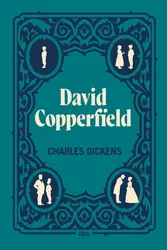
  1. David Copperfield - Audiobook

    Charles Dickens, Classic Audiobooks

  2. 100 Klassiker der Romantik - Meisterwerke, die man kennen muss : Epische Liebesdramen und große Erwartungen in zeitlosen Geschichten

    Jane Austen, Louisa May Alcott, D. H. Lawrence, Fjodor Dostojewski, William Shakespeare, Hedwig Courths-Mahler, Frances Burney, Charlotte Brontë, Alexandre Dumas, Margaret Mitchell, Charles Dickens, L.M. Montgomery, Eugenie Marlitt, Wilhelmine Heimburg, Elisabeth Bürstenbinder, Stendhal, Johann Wolfgang von Goethe, Walter Scott, Guy De Maupassant, Victor Hugo, George Sand, Leo Tolstoi, Gabriele D’Annunzio, Rudyard Kipling, Gustave Flaubert, Nathaniel Hawthorne, Jean-Jacques Rousseau, Bernardin de Saint-Pierre, F. Scott Fitzgerald, Prosper Mérimée, Edith Wharton, Lena Christ, François-René de Chateaubriand, Stefan Zweig, Alexander Sergejewitsch Puschkin, Ida Boy-Ed, Arthur Schnitzler, Anatole France, Johanna Spyri, George Eliot, Gaston Leroux, Nataly von Eschstruth, Gottfried von Straßburg, Sophie Mereau, Caroline von Wolzogen, Benedikte Naubert, Henry De Vere Stacpoole, Levin Schücking

  3. 5.0

    David Copperfield (Ungekürzte Lesung)

    Charles Dickens

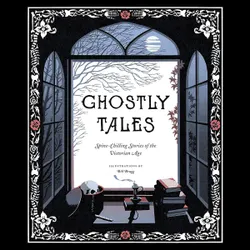
  4. Ghostly Tales : Spine-Chilling Stories of the Victorian Age

    M. R. James, Elizabeth Gaskell, Charles Dickens, Robert Louis Stevenson, Amelia B. Edwards, Arthur Conan Doyle, F. Marion Crawford

  5. Eine Geschichte aus zwei Städten

    Charles Dickens

  6. Die Reisen berühmter Schriftsteller : Die Harzreise, Wanderungen durch die Mark Brandenburg, Meine Reise um die Welt, Italienische Reise

    Mark Twain, Charles Dickens, Theodor Fontane, Johann Wolfgang von Goethe, Washington Irving, Stefan Zweig, Joseph Roth, Karl Simrock, Johanna Schopenhauer, Heinrich Heine, Karl Emil Franzos, Robert Louis Stevenson

  7. England erzählt : Die große Hörbuch Box der britischen Literatur

    William Shakespeare, Charles Dickens, Arthur Conan Doyle

  8. 5.0

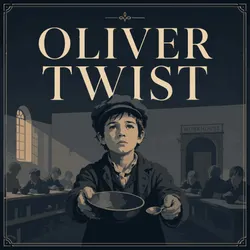
    Oliver Twist

    Charles Dickens

  9. 1. Nov.
    4.5

    David Copperfield

    Charles Dickens

  10. 27. Juli

    Oliver Twist

    Charles Dickens

  11. Neu

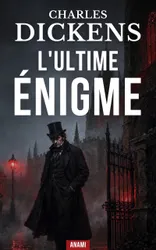
    L'Ultime Énigme : Le Mystère d’Edwin Drood : L'enquête victorienne la plus mystérieuse du siècle

    Charles Dickens

  12. Neu
    3.2

    Great Expectations

    Charles Dickens