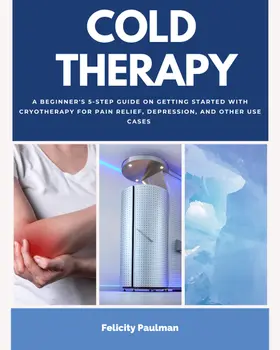
Cold Therapy : A Beginner's 5-Step Guide on Getting Started with Cryotherapy for Pain Relief, Depression, and Other Use Cases

There are a wide variety of approaches to choose from when it comes to the management of pain. Some people get comfort from drugs, while others favor more natural approaches such as chiropractic care or acupuncture. Acupuncture and chiropractic care are two examples.

Cold therapy is a potentially useful choice for patients who choose a treatment that requires more active participation from them. This treatment, which is often referred to as cryotherapy, involves subjecting the body to exceedingly low temperatures. This can be accomplished with the use of ice packs, immersion in cold water, or even nitrogen gas.

It is believed that cold treatment works by numbing the nerve endings and lowering inflammation, however the specific mechanism that causes these effects is not entirely known. In addition to this, there is evidence from certain studies that shows it may also aid to strengthen the immune system.

Although further research is required to verify these advantages, cold therapy is a risk-free and non-invasive treatment option that has the potential to assist patients who suffer from chronic pain with some respite.

In this introduction to cold treatment, often known as cryotherapy, we are going to look at the following specific areas:

● What is cold therapy?

● History of cold therapy

● Cold therapy techniques

● How does cold therapy work?

● Benefits of cold therapy

● Use cases of cold therapy

● A potential 5-step guide on how to get started with cold therapy

● Heat therapy vs. cold therapy

● Risks or potential side effects of cold therapy

● Who should not use cold therapy

If you want to know more about cold therapy and how to get started, read on!
Über dieses Buch

There are a wide variety of approaches to choose from when it comes to the management of pain. Some people get comfort from drugs, while others favor more natural approaches such as chiropractic care or acupuncture. Acupuncture and chiropractic care are two examples.

Cold therapy is a potentially useful choice for patients who choose a treatment that requires more active participation from them. This treatment, which is often referred to as cryotherapy, involves subjecting the body to exceedingly low temperatures. This can be accomplished with the use of ice packs, immersion in cold water, or even nitrogen gas.

It is believed that cold treatment works by numbing the nerve endings and lowering inflammation, however the specific mechanism that causes these effects is not entirely known. In addition to this, there is evidence from certain studies that shows it may also aid to strengthen the immune system.

Although further research is required to verify these advantages, cold therapy is a risk-free and non-invasive treatment option that has the potential to assist patients who suffer from chronic pain with some respite.

In this introduction to cold treatment, often known as cryotherapy, we are going to look at the following specific areas:

● What is cold therapy?

● History of cold therapy

● Cold therapy techniques

● How does cold therapy work?

● Benefits of cold therapy

● Use cases of cold therapy

● A potential 5-step guide on how to get started with cold therapy

● Heat therapy vs. cold therapy

● Risks or potential side effects of cold therapy

● Who should not use cold therapy

If you want to know more about cold therapy and how to get started, read on!

Starte noch heute mit diesem Buch für CHF 0

  • Hole dir während der Testphase vollen Zugriff auf alle Bücher in der App
  • Keine Verpflichtungen, jederzeit kündbar
Jetzt kostenlos testen
Mehr als 52 000 Menschen haben Nextory im App Store und auf Google Play 5 Sterne gegeben.

  1. Neu

    The Ikigai Workbook for Women : 30 Days of Japanese Wisdom to Discover Your Purpose, Restore Your Energy, and Build a Life That Feels Like Yours

    Felicity Paulman

  2. Neu

    The ADHD Mom's Time Code : A Guilt-Free System for Moms Who Lose Track of Time, Can't Stick to Schedules, and Are Done Feeling Like They're Failing

    Felicity Paulman

  3. Rewire Your Anxious Brain After 40 for Women : The Hormone-Neuroscience Guide to Calming Perimenopause Anxiety, Breaking Worry Loops, and Rebuilding Emotional Stability Without Medication

    Felicity Paulman

  4. Lectin-Free Starter Plan : A 14-Day “What to Eat” System with Food Lists, Swap Charts, and a Simple Meal Plan + Recipes

    Felicity Paulman

  5. Motivation for Women in Tech Burnout Guide : A 6-Week System to Restore Drive, Set Boundaries and Lead Confidently in High-Demand Roles

    Felicity Paulman

  6. High-Functioning Anxiety for High-Achieving Women : A 30-Day Guide to Calm Overthinking, Strengthen Emotional Boundaries, and Restore Mental Clarity

    Felicity Paulman

  7. The After-Shift Reset Guide for Night-Shift Clinicians : 10-Minute Wind-Down Routines, Sleep-Support Habits, and Nervous-System Calming Tools for Hospital and EMS Teams

    Felicity Paulman

  8. Introvert Leadership for Women

    Felicity Paulman

  9. Healing After Breakup : A 30-Day Spiritual Guide to Rebuild Identity, Release Attachment, and Regain Inner Stability

    Felicity Paulman

  10. Gaslighting Recovery for Divorced Women : A 5-Phase Guide to Break Free from Manipulation, Rebuild Confidence, and Move Forward After Divorce

    Felicity Paulman

  11. Sobriety for High-Achieving Women : A 5-Phase Guide to Stop Drinking, Rebuild Confidence, and Lead with Clarity

    Felicity Paulman

  12. 3.0

    Pranic Healing for Beginners : A 5-Step Framework for Stress, Burnout, and Digital Overload

    Felicity Paulman