Daniel Deronda

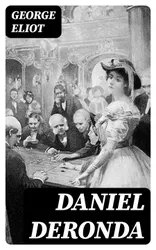
We rely on your support to help us keep producing beautiful, free, and unrestricted editions of literature for the digital age. Will you support our efforts with a donation ? Daniel Deronda , published in 1876, was George Eliot's last novel. It deals with two major characters whose lives intersect: One is a spoiled young woman named Gwendolen Harleth who makes an unwise marriage to escape impending poverty; the other is the titular character, Daniel Deronda, a wealthy young man who feels a mission to help the suffering. During her childhood Gwendolen's family was well-off. She lived in comfort and was indulged and pampered. But the family's fortune is lost through an unwise investment, and she returns to a life of near-poverty, a change which she greatly resents both for herself and for her widowed mother. The only escape seems to be for her to marry a wealthy older man who has been courting her in a casual, unemotional way. The marriage turns out to be a terrible mistake. Daniel Deronda has been raised by Sir Hugo Mallinger as his nephew, but Daniel has never discovered his true parentage, thinking it likely that he is Sir Hugo's natural son. This consciousness of his probable illegitimacy moves him to kindness and tolerance towards anyone who is suffering from disadvantage. One evening, while rowing on the river Thames, he spots a young woman about to leap into the water to drown herself. He persuades her instead to come with him for shelter to a family he knows. The young woman turns out to be Jewish, and through his trying to help her find her lost family, Deronda comes into contact with Jewish culture—and in particular with a man named Mordecai, who has a passionate vision for the future of the Jewish race and who sees in Daniel a kindred spirit. The paths that Gwendolen and Daniel follow intersect often, and Daniel's kindly nature moves him to try to offer her comfort and advice in her moments of distress. Unsurprisingly, Gwendolen misinterprets Daniel's attentions. In Daniel Deronda Eliot demonstrates considerable sympathy towards the Jewish people, their culture, and their aspirations for a national homeland. At the time this was an unpopular and even.
Über dieses Buch

We rely on your support to help us keep producing beautiful, free, and unrestricted editions of literature for the digital age. Will you support our efforts with a donation ? Daniel Deronda , published in 1876, was George Eliot's last novel. It deals with two major characters whose lives intersect: One is a spoiled young woman named Gwendolen Harleth who makes an unwise marriage to escape impending poverty; the other is the titular character, Daniel Deronda, a wealthy young man who feels a mission to help the suffering. During her childhood Gwendolen's family was well-off. She lived in comfort and was indulged and pampered. But the family's fortune is lost through an unwise investment, and she returns to a life of near-poverty, a change which she greatly resents both for herself and for her widowed mother. The only escape seems to be for her to marry a wealthy older man who has been courting her in a casual, unemotional way. The marriage turns out to be a terrible mistake. Daniel Deronda has been raised by Sir Hugo Mallinger as his nephew, but Daniel has never discovered his true parentage, thinking it likely that he is Sir Hugo's natural son. This consciousness of his probable illegitimacy moves him to kindness and tolerance towards anyone who is suffering from disadvantage. One evening, while rowing on the river Thames, he spots a young woman about to leap into the water to drown herself. He persuades her instead to come with him for shelter to a family he knows. The young woman turns out to be Jewish, and through his trying to help her find her lost family, Deronda comes into contact with Jewish culture—and in particular with a man named Mordecai, who has a passionate vision for the future of the Jewish race and who sees in Daniel a kindred spirit. The paths that Gwendolen and Daniel follow intersect often, and Daniel's kindly nature moves him to try to offer her comfort and advice in her moments of distress. Unsurprisingly, Gwendolen misinterprets Daniel's attentions. In Daniel Deronda Eliot demonstrates considerable sympathy towards the Jewish people, their culture, and their aspirations for a national homeland. At the time this was an unpopular and even.

Starte noch heute mit diesem Buch für CHF 0

  • Hole dir während der Testphase vollen Zugriff auf alle Bücher in der App
  • Keine Verpflichtungen, jederzeit kündbar
Jetzt kostenlos testen
Mehr als 52 000 Menschen haben Nextory im App Store und auf Google Play 5 Sterne gegeben.

  1. 100 Klassiker der Romantik - Meisterwerke, die man kennen muss : Epische Liebesdramen und große Erwartungen in zeitlosen Geschichten

    Jane Austen, Louisa May Alcott, D. H. Lawrence, Fjodor Dostojewski, William Shakespeare, Hedwig Courths-Mahler, Frances Burney, Charlotte Brontë, Alexandre Dumas, Margaret Mitchell, Charles Dickens, L.M. Montgomery, Eugenie Marlitt, Wilhelmine Heimburg, Elisabeth Bürstenbinder, Stendhal, Johann Wolfgang von Goethe, Walter Scott, Guy De Maupassant, Victor Hugo, George Sand, Leo Tolstoi, Gabriele D’Annunzio, Rudyard Kipling, Gustave Flaubert, Nathaniel Hawthorne, Jean-Jacques Rousseau, Bernardin de Saint-Pierre, F. Scott Fitzgerald, Prosper Mérimée, Edith Wharton, Lena Christ, François-René de Chateaubriand, Stefan Zweig, Alexander Sergejewitsch Puschkin, Ida Boy-Ed, Arthur Schnitzler, Anatole France, Johanna Spyri, George Eliot, Gaston Leroux, Nataly von Eschstruth, Gottfried von Straßburg, Sophie Mereau, Caroline von Wolzogen, Benedikte Naubert, Henry De Vere Stacpoole, Levin Schücking

  2. Bestbewertet
    4.8

    Middlemarch

    George Eliot

  3. 3.6

    Middlemarch

    George Eliot

  4. 50 Masterpieces you have to read before you die vol: 2

    Louisa May Alcott, Jane Austen, Joseph Conrad, D. H. Lawrence, George Eliot, Leo Tolstoy, James Joyce, Charles Dickens, Bram Stoker, Oscar Wilde, Honoré de Balzac, Edgar Rice Burroughs, Anne Brontë, Charlotte Brontë, Emily Brontë, Lewis Carroll, Willa Cather, Miguel de Cervantes, E. Cummings, Fyodor Dostoyevsky, Daniel Defoe, Arthur Conan Doyle, Alexandre Dumas, Gustave Flaubert, Henry James, Victor Hugo

  5. 50 Masterpieces you have to read before you die vol 1

    Louisa May Alcott, Jane Austen, Joseph Conrad, Edwin Abbott, George Eliot, Leo Tolstoy, James Joyce, Charles Dickens, Bram Stoker, Oscar Wilde, Honoré de Balzac, Edgar Rice Burroughs, Anne Brontë, Charlotte Brontë, Emily Brontë, Lewis Carroll, Willa Cather, Miguel de Cervantes, E. Cummings, Fyodor Dostoyevsky, Daniel Defoe, Arthur Conan Doyle, Alexandre Dumas, Gustave Flaubert, Henry James, Victor Hugo

  6. 4.3

    Silas Marner

    George Eliot

  7. 4.0

    The Mill on the Floss

    George Eliot

  8. Daniel Deronda

    George Eliot

  9. 3.6

    Middlemarch

    George Eliot

  10. 3.6

    Middlemarch

    George Eliot

  11. 4.0

    The Mill On The Floss

    George Eliot