Über dieses Buch

We rely on your support to help us keep producing beautiful, free, and unrestricted editions of literature for the digital age. Will you support our efforts with a donation ? King Lear is a tragedy by Shakespeare , written about 1605 or 1606. Shakespeare based it on the legendary King Leir of the Britons, whose story is outlined in Geoffrey of Monmouth's pseudohistorical History of the Kings of Britain (written in about 1136). The play tells the tale of the aged King Lear who is passing on the control of his kingdom to his three daughters. He asks each of them to express their love for him, and the first two, Goneril and Regan do so effusively, saying they love him above all things. But his youngest daughter, Cordelia, is compelled to be truthful and says that she must reserve some love for her future husband. Lear, enraged, cuts her off without any inheritance. The secondary plot deals with the machinations of Edmund, the bastard son of the Earl of Gloucester, who manages to convince his father that his legitimate son Edgar is plotting against him. After Lear steps down from power, he finds that his elder daughters have no real respect or love for him, and treat him and his followers as a nuisance. They allow the raging Lear to wander out into a storm, hoping to be rid of him, and conspire with Edmund to overthrow the Earl of Gloucester. The play is a moving study of the perils of old age and the true meaning of filial love. It ends tragically with the deaths of both Cordelia and Lear—so tragically, in fact, that performances during the Restoration period sometimes substituted a happy ending. In modern times, though, King Lear is performed as written and generally regarded as one of Shakespeare's best plays.

Starte noch heute mit diesem Buch für CHF 0

  • Hole dir während der Testphase vollen Zugriff auf alle Bücher in der App
  • Keine Verpflichtungen, jederzeit kündbar
Jetzt kostenlos testen
Mehr als 52 000 Menschen haben Nextory im App Store und auf Google Play 5 Sterne gegeben.

  1. Le allegre spose di Windsor

    William Shakespeare

  2. 4.0

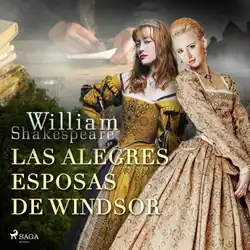
    Las alegres esposas de Windsor

    William Shakespeare

  3. 1. März
    #4

    Romeo y Julieta

    William Shakespeare

  4. 13. Nov.

    Dramer II. Strö lycka, féer : Komiska förväxlingar, Så tuktas en argbigga, Två gentlemän från Verona, Kärleks möda är förgäves, En midsommarnattsdröm, Muntra fruarna i Windsor.

    William Shakespeare

  5. 5. Sept.
    #1

    The Tempest

    William Shakespeare

  6. Neu

    William Shakespeare : Zweisprachige ungekürzte Ausgabe / Bilingual unabridged edition: German / English

    William Shakespeare

  7. Neu

    William Shakespeare : Unabridged version with stage directions

    William Shakespeare

  8. Neu

    William Shakespeare : Unabridged version with stage directions

    William Shakespeare

  9. Neu

    William Shakespeare : Unabridged version with stage directions

    William Shakespeare

  10. Neu

    50 Clásicos que Debes Leer Antes de Morir : Un viaje literario por los tesoros de la literatura universal

    Dante Alighieri, Aristóteles, Jane Austen, Charles Baudelaire, Giovanni Boccaccio, Anne Brontë, C. Collodi, James Fenimore Cooper, Fedor Mikhaïlovitch Dostoïevski, Arthur Conan Doyle, Alexandre Dumas, José de Espronceda, Gustave Flaubert, Sigmund Freud, Benito Pérez Galdós, Kahlil Gibran, Johann Wolfgang Goethe, Victor Hugo, Thomas Hardy, Nathaniel Hawthorne, Vicente Blasco Ibáñez, Washington Irving, James Joyce, Mariano José Larra, Jack London, Federico García Lorca, H.P. Lovecraft, Antonio Machado, Gustav Meyrink, John Stuart Mill, Amado Nervo, Friedrich Nietzsche, Solomon Northup, Alexander Sergeyevich Pushkin, Francisco de Quevedo, Walter Scott, William Shakespeare, Robert Louis Stevenson, Harriet Beecher Stowe, Jonathan Swift, Mark Twain, Miguel De Unamuno, Ramón María Valle-Inclán, Julio Verne, Virginia Woolf

  11. The Big Book of Christmas

    Louisa May Alcott, O.Henry, Mark Twain, Beatrix Potter, Charles Dickens, William Shakespeare, Harriet Beecher Stowe, Emily Dickinson, Robert Louis Stevenson, Rudyard Kipling

  12. Hamlet

    William Shakespeare