Love Stories

According to Wikipedia: "Mary Roberts Rinehart (August 12, 1876-September 22, 1958) was a prolific author often called the American Agatha Christie.[1] She is considered the source of the phrase "The butler did it", although she did not actually use the phrase herself, and also considered to have invented the "Had-I-But-Known" school of mystery writing.... Rinehart wrote hundreds of short stories, poems, travelogues and special articles. Many of her books and plays, such as The Bat (1920) were adapted for movies, such as The Bat (1926), The Bat Whispers (1930), and The Bat (1959). While many of her books were best-sellers, critics were most appreciative of her murder mysteries. Rinehart, in The Circular Staircase (1908), is credited with inventing the "Had-I-But-Known" school of mystery writing. The Circular Staircase is a novel in which "a middle-aged spinster is persuaded by her niece and nephew to rent a country house for the summer. The house they choose belonged to a bank defaulter who had hidden stolen securities in the walls. The gentle, peace-loving trio is plunged into a series of crimes solved with the help of the aunt. This novel is credited with being the first in the "Had-I-But-Known" school."[3] The Had-I-But-Known mystery novel is one where the principal character (frequently female) does less than sensible things in connection with a crime which have the effect of prolonging the action of the novel. Ogden Nash parodied the school in his poem Don't Guess Let Me Tell You: "Sometimes the Had I But Known then what I know now I could have saved at least three lives by revealing to the Inspector the conversation I heard through that fortuitous hole in the floor." The phrase "The butler did it", which has become a cliché, came from Rinehart's novel The Door, in which the butler actually did do it, although that exact phrase does not actually appear in the work."

Über dieses Buch

According to Wikipedia: "Mary Roberts Rinehart (August 12, 1876-September 22, 1958) was a prolific author often called the American Agatha Christie.[1] She is considered the source of the phrase "The butler did it", although she did not actually use the phrase herself, and also considered to have invented the "Had-I-But-Known" school of mystery writing.... Rinehart wrote hundreds of short stories, poems, travelogues and special articles. Many of her books and plays, such as The Bat (1920) were adapted for movies, such as The Bat (1926), The Bat Whispers (1930), and The Bat (1959). While many of her books were best-sellers, critics were most appreciative of her murder mysteries. Rinehart, in The Circular Staircase (1908), is credited with inventing the "Had-I-But-Known" school of mystery writing. The Circular Staircase is a novel in which "a middle-aged spinster is persuaded by her niece and nephew to rent a country house for the summer. The house they choose belonged to a bank defaulter who had hidden stolen securities in the walls. The gentle, peace-loving trio is plunged into a series of crimes solved with the help of the aunt. This novel is credited with being the first in the "Had-I-But-Known" school."[3] The Had-I-But-Known mystery novel is one where the principal character (frequently female) does less than sensible things in connection with a crime which have the effect of prolonging the action of the novel. Ogden Nash parodied the school in his poem Don't Guess Let Me Tell You: "Sometimes the Had I But Known then what I know now I could have saved at least three lives by revealing to the Inspector the conversation I heard through that fortuitous hole in the floor." The phrase "The butler did it", which has become a cliché, came from Rinehart's novel The Door, in which the butler actually did do it, although that exact phrase does not actually appear in the work."

Starte noch heute mit diesem Buch für CHF 0

  • Hole dir während der Testphase vollen Zugriff auf alle Bücher in der App
  • Keine Verpflichtungen, jederzeit kündbar
Jetzt kostenlos testen
Mehr als 52 000 Menschen haben Nextory im App Store und auf Google Play 5 Sterne gegeben.

  1. 18. Feb.

    Die Villa am Meer

    Mary Roberts Rinehart

  2. 30 Suspense and Thriller Masterpieces

    Marcel Allain, Grant Allen, John Buchan, Edgar Rice Burroughs, Gilbert Keith Chesterton, Erskine Childers, Wilkie Collins, Arthur Griffiths, Henry Rider Haggard, Thomas Hardy, Anthony Hope, William Andrew Johnston, Frederic Arnold Kummer, William Le Queux, Frank Norris, Edward Phillips Oppenheim, Mary Roberts Rinehart, Allen Upward, Louis Joseph Vance, Edgar Wallace, Fred Merrick White

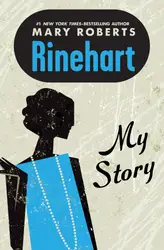
  3. My Story

    Mary Roberts Rinehart

  4. 30 Suspense and Thriller Masterpieces you have to read in your life

    Marcel Allain, Grant Allen, John Buchan, Edgar Rice Burroughs, Gilbert Keith Chesterton, Erskine Childers, Wilkie Collins, Arthur Griffiths, Henry Rider Haggard, Thomas Hardy, Anthony Hope, William Andrew Johnston, Frederic Arnold Kummer, William Le Queux, Frank Norris, Edward Phillips Oppenheim, Mary Roberts Rinehart, Allen Upward, Louis Joseph Vance, Edgar Wallace, Fred Merrick White

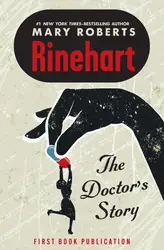
  5. The Doctor's Story

    Mary Roberts Rinehart

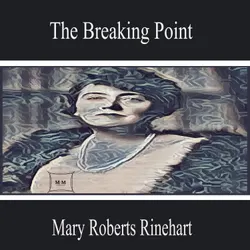
  6. The Breaking Point

    Mary Roberts Rinehart

  7. 5.0

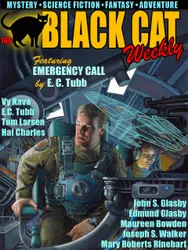
    Black Cat Weekly #168

    E. C. Tubb, Edmund Glasby, Hal Charles, Joseph S. Walker, Tom Larsen, Nelson S. Bond, Vy Kava, Maureen Bowden, John S. Glasby, Mary Roberts Rinehart

  8. A Poor Wise Man

    Mary Roberts Rinehart, Sheba Blake

  9. Affinities

    Mary Roberts Rinehart, Sheba Blake

  10. Black Cat Weekly #64

    John M. Floyd, Andrew Welsh-Huggins, Sydney J. Bounds, Hal Charles, Larry Tritten, Alfred Bester, Hal Meredeth, George O. Smith, Johnston McCulley, Mary Roberts Rinehart

  11. The Man in Lower Ten

    Mary Roberts Rinehart

  12. Long Live the King!

    Mary Roberts Rinehart