Martina Kiss, Natural Horse 1 /English : A mindful aproach to Horses

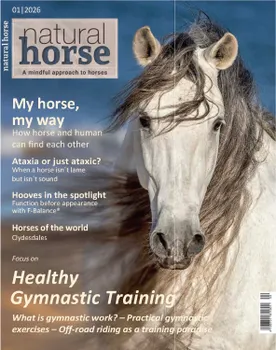
This issue of Natural Horse focuses on mindful, holistic horsemanship and the importance of understanding horses as individuals. Central themes include healthy gymnastic training, communication, hoof care, and the emotional relationship between horse and human.

One major article, "My Horse, My Way" by Petra Haubner, explores how successful partnerships are built through honesty, empathy, and respect for a horse's physical and mental abilities. The author emphasizes that horses are not "projects" but unique personalities with individual strengths, weaknesses, and emotional needs. Rather than forcing expectations, riders should adapt their goals and training methods to the horse's nature and wellbeing.

Another key topic is mindfulness in equestrian life. The magazine discusses how respectful communication between people directly influences horses, as horses are highly sensitive to human emotions and tension. It criticizes toxic behavior in social media and stable culture and encourages empathy, constructive dialogue, and emotional awareness.

Several articles address horse health and movement. Yve Ehler explains that lack of motivation in horses is often linked to pain, stress, trauma, or communication problems rather than laziness. The article highlights the importance of observing subtle behavioral changes and considering both physical and psychological causes.

The magazine also introduces innovative approaches to hoof care, such as the F-Balance® method, which focuses on natural hoof function and biomechanics instead of appearance alone. Other sections discuss ataxia, stretching exercises, epigenetics, riding techniques, and the benefits of gymnastic exercises for maintaining long-term soundness and balance in horses. Overall, the issue promotes compassionate, horse-centered training and responsible horsemanship.

Über dieses Buch

This issue of Natural Horse focuses on mindful, holistic horsemanship and the importance of understanding horses as individuals. Central themes include healthy gymnastic training, communication, hoof care, and the emotional relationship between horse and human.

One major article, "My Horse, My Way" by Petra Haubner, explores how successful partnerships are built through honesty, empathy, and respect for a horse's physical and mental abilities. The author emphasizes that horses are not "projects" but unique personalities with individual strengths, weaknesses, and emotional needs. Rather than forcing expectations, riders should adapt their goals and training methods to the horse's nature and wellbeing.

Another key topic is mindfulness in equestrian life. The magazine discusses how respectful communication between people directly influences horses, as horses are highly sensitive to human emotions and tension. It criticizes toxic behavior in social media and stable culture and encourages empathy, constructive dialogue, and emotional awareness.

Several articles address horse health and movement. Yve Ehler explains that lack of motivation in horses is often linked to pain, stress, trauma, or communication problems rather than laziness. The article highlights the importance of observing subtle behavioral changes and considering both physical and psychological causes.

The magazine also introduces innovative approaches to hoof care, such as the F-Balance® method, which focuses on natural hoof function and biomechanics instead of appearance alone. Other sections discuss ataxia, stretching exercises, epigenetics, riding techniques, and the benefits of gymnastic exercises for maintaining long-term soundness and balance in horses. Overall, the issue promotes compassionate, horse-centered training and responsible horsemanship.