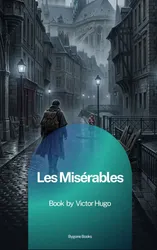
Über dieses Buch

Bringing together Ninety-Three and Les Misérables, this illustrated edition presents Victor Hugo's grandest meditations on revolution, justice, mercy, and historical destiny. Les Misérables transforms the social novel into a vast moral epic, moving from the underworld of poverty to the barricades of 1832, while Ninety-Three revisits the French Revolution's Reign of Terror with tragic intensity. Hugo's style—rhetorical, lyrical, digressive, and profoundly theatrical—belongs to the high Romantic tradition, yet it anticipates modern social realism in its attention to institutions, class, and conscience. Victor Hugo (1802–1885), poet, dramatist, novelist, and statesman, wrote from within the upheavals of nineteenth-century France. His exile under Napoleon III sharpened his republican convictions and deepened his sympathy for the dispossessed. The moral architecture of these novels reflects his lifelong struggle to reconcile revolutionary ideals with human compassion, and political necessity with spiritual redemption. This volume is recommended for readers seeking not merely historical fiction, but literature that enlarges history into ethical inquiry. The illustrations enhance Hugo's visual imagination, making this edition especially rewarding for students, collectors, and anyone drawn to monumental narratives of suffering, resistance, and grace.

This enriched edition has been carefully crafted to add value to your reading experience.

- A comprehensive Introduction outlines these selected works' unifying features, themes, or stylistic evolutions.

- The Author Biography highlights personal milestones and literary influences that shape the entire body of writing.

- A Historical Context section situates the works in their broader era—social currents, cultural trends, and key events that underpin their creation.

- A concise Synopsis (Selection) offers an accessible overview of the included texts, helping readers navigate plotlines and main ideas without revealing critical twists.

- A unified Analysis examines recurring motifs and stylistic hallmarks across the collection, tying the stories together while spotlighting the different work's strengths.

- Reflection questions inspire deeper contemplation of the author's overarching message, inviting readers to draw connections among different texts and relate them to modern contexts.

- Lastly, our hand‐picked Memorable Quotes distill pivotal lines and turning points, serving as touchstones for the collection's central themes.

Starte noch heute mit diesem Buch für CHF 0

  • Hole dir während der Testphase vollen Zugriff auf alle Bücher in der App
  • Keine Verpflichtungen, jederzeit kündbar
Jetzt kostenlos testen
Mehr als 52 000 Menschen haben Nextory im App Store und auf Google Play 5 Sterne gegeben.

  1. 50 Klassiker des Feminismus - Bücher, die man kennen muss : Das Erwachen, Lelia, Jane Eyre, Neue Amazonia, Die gelbe Tapete, Mrs Dalloway, Kleine Frauen, Verteidigung der Rechte der Frau, Meine brillante Karriere

    Kate Chopin, Charlotte Perkins Gilman, Virginia Woolf, Charlotte Brontë, George Sand, Louisa May Alcott, Jane Austen, L.M. Montgomery, Victor Hugo, Daniel Defoe, Nathaniel Hawthorne, Wilhelmine von Hillern, Adalbert Stifter, Luise Ahlborn, George Eliot, Lou Andreas-Salomé, D. H. Lawrence, Henry James, Margaret Mitchell, Edith Wharton, Miles Franklin, Willa Cather, Leo Tolstoi, Henrik Ibsen, Elizabeth Gaskell, Nikolai Semjonowitsch Leskow, Theodore Dreiser, Elizabeth von Arnim, Colette, Emmeline Pankhurst, Louise Aston, Bertha von Suttner, Hedwig Dohm, Mary Wollstonecraft, Elizabeth Cady Stanton, Matilda Joslyn Gage, John Stuart Mill, Thomas Hardy, Sinclair Lewis, Elizabeth Burgoyne Corbett, Anne Brontë

  2. Die größten Regency-Liebesromane : Regency Romance: Stolz und Vorurteil, Cecilia, Emma, Rot und Schwarz, Überredung, Armance

    Frances Burney, Jane Austen, Marianne Ehrmann, Sophie Albrecht, Caroline von Wolzogen, Christian August Vulpius, Johanna Schopenhauer, Selma Lagerlöf, Benedikte Naubert, Anne Brontë, Charlotte Brontë, Emily Brontë, Johann Wolfgang Goethe, Hermann Stegemann, Stendhal, Levin Schücking, Gabriele D’Annunzio, Victor Hugo, Eufemia von Adlersfeld-Ballestrem, Bernardin de Saint-Pierre

  3. The Rise of Deathwatch (Annotated) : Enriched Edition. A Journey Through Gothic Horror: Explore 19th Century Dark Romance and Haunting Victorian Mysteries

    Horace Walpole, William Thomas Beckford, Eliza Parsons, William Godwin, Ann Radcliffe, Matthew Gregory Lewis, Charles Brockden Brown, Jane Austen, Mary Shelley, Thomas love Peacock, Edgar Allan Poe, John William Polidori, Washington Irving, Charles Robert Maturin, James Hogg, Victor Hugo, Frederick Marryat, Nikolai Gogol, Charlotte Brontë, Emily Brontë, James Malcolm Rymer, Thomas Peckett Prest, Nathaniel Hawthorne, George Eliot, Wilkie Collins, Robert Louis Stevenson, Charles Dickens, Joseph Sheridan Fanu, Arthur Conan Doyle, Oscar Wilde, Guy De Maupassant, Anna Katharine Green, Charlotte Perkins Gilman, Arthur Machen, George MacDonald, John Meade Falkner, H.G. Wells, Richard Marsh, Henry James, Bram Stoker, W. W. Jacobs, Robert Hugh Benson, Gaston Leroux, Théophile Gautier, William Hope Hodgson, Grant Allen

  4. 28. Dez.

    Erzählungen 10 : Quasimodo und sein Pflegevater, Phoebus Heirat, Quasimodos Heirat.

    Victor Hugo

  5. 7. Dez.

    Erzählungen 9 : Der kleine Schuh.

    Victor Hugo

  6. 16. Nov.

    Erzählungen 8 : Ludwig der Elfte in der Bastille.

    Victor Hugo

  7. 19. Okt.

    Erzählungen 7 : Es lebe die Freude, Ein ungeschickter Freund.

    Victor Hugo

  8. 14. Sept.

    Erzählungen 6 : Ein Dichter hat einen vernünftigen Gedanken, Werde in Teufels Namen ein Gauner.

    Victor Hugo

  9. Neu

    Erzählungen 5 : Das Herz einer Missgestalt, Sandstein und Kristall, Der Schlüssel zur roten Türe.

    Victor Hugo

  10. Neu
    4.2

    Les Misérables

    Victor Hugo

  11. Neu

    Die größten Klassiker der französischen Literatur

    Victor Hugo, Marcel Proust, Voltaire, George Sand, Emile Zola, Gustave Flaubert, Honoré de Balzac, François Rabelais, Alexandre Dumas, Charles Baudelaire, Stendhal, Denis Diderot, Jean-Jacques Rousseau, Marie-Madeleine de Fayette, Alphonse Daudet

  12. Neu
    4.0

    Les Misérables : Adapted for French learners - In useful French words for conversation - French Intermediate

    Victor Hugo