Über dieses Buch

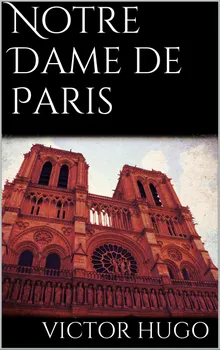
A few years ago, while visiting or, rather, rummaging about Notre-Dame, the author of this book found, in an obscure nook of one of the towers, the following word, engraved by hand upon the wall:-

ANArKH.

These Greek capitals, black with age, and quite deeply graven in the stone, with I know not what signs peculiar to Gothic caligraphy imprinted upon their forms and upon their attitudes, as though with the purpose of revealing that it had been a hand of the Middle Ages which had inscribed them there, and especially the fatal and melancholy meaning contained in them, struck the author deeply.

He questioned himself; he sought to divine who could have been that soul in torment which had not been willing to quit this world without leaving this stigma of crime or unhappiness upon the brow of the ancient church.

Afterwards, the wall was whitewashed or scraped down, I know not which, and the inscription disappeared. For it is thus that people have been in the habit of proceeding with the marvellous churches of the Middle Ages for the last two hundred years. Mutilations come to them from every quarter, from within as well as from without. The priest whitewashes them, the archdeacon scrapes them down; then the populace arrives and demolishes them.

Thus, with the exception of the fragile memory which the author of this book here consecrates to it, there remains today nothing whatever of the mysterious word engraved within the gloomy tower of Notre Dame,-nothing of the destiny which it so sadly summed up. The man who wrote that word upon the wall disappeared from the midst of the generations of man many centuries ago; the word, in its turn, has been effaced from the wall of the church; the church will, perhaps, itself soon disappear from the face of the earth.

It is upon this word that this book is founded.

Starte noch heute mit diesem Buch für CHF 0

  • Hole dir während der Testphase vollen Zugriff auf alle Bücher in der App
  • Keine Verpflichtungen, jederzeit kündbar
Jetzt kostenlos testen
Mehr als 52 000 Menschen haben Nextory im App Store und auf Google Play 5 Sterne gegeben.

  1. 50 Klassiker des Feminismus - Bücher, die man kennen muss : Das Erwachen, Lelia, Jane Eyre, Neue Amazonia, Die gelbe Tapete, Mrs Dalloway, Kleine Frauen, Verteidigung der Rechte der Frau, Meine brillante Karriere

    Kate Chopin, Charlotte Perkins Gilman, Virginia Woolf, Charlotte Brontë, George Sand, Louisa May Alcott, Jane Austen, L.M. Montgomery, Victor Hugo, Daniel Defoe, Nathaniel Hawthorne, Wilhelmine von Hillern, Adalbert Stifter, Luise Ahlborn, George Eliot, Lou Andreas-Salomé, D. H. Lawrence, Henry James, Margaret Mitchell, Edith Wharton, Miles Franklin, Willa Cather, Leo Tolstoi, Henrik Ibsen, Elizabeth Gaskell, Nikolai Semjonowitsch Leskow, Theodore Dreiser, Elizabeth von Arnim, Colette, Emmeline Pankhurst, Louise Aston, Bertha von Suttner, Hedwig Dohm, Mary Wollstonecraft, Elizabeth Cady Stanton, Matilda Joslyn Gage, John Stuart Mill, Thomas Hardy, Sinclair Lewis, Elizabeth Burgoyne Corbett, Anne Brontë

  2. Die größten Regency-Liebesromane : Regency Romance: Stolz und Vorurteil, Cecilia, Emma, Rot und Schwarz, Überredung, Armance

    Frances Burney, Jane Austen, Marianne Ehrmann, Sophie Albrecht, Caroline von Wolzogen, Christian August Vulpius, Johanna Schopenhauer, Selma Lagerlöf, Benedikte Naubert, Anne Brontë, Charlotte Brontë, Emily Brontë, Johann Wolfgang Goethe, Hermann Stegemann, Stendhal, Levin Schücking, Gabriele D’Annunzio, Victor Hugo, Eufemia von Adlersfeld-Ballestrem, Bernardin de Saint-Pierre

  3. The Rise of Deathwatch (Annotated) : Enriched Edition. A Journey Through Gothic Horror: Explore 19th Century Dark Romance and Haunting Victorian Mysteries

    Horace Walpole, William Thomas Beckford, Eliza Parsons, William Godwin, Ann Radcliffe, Matthew Gregory Lewis, Charles Brockden Brown, Jane Austen, Mary Shelley, Thomas love Peacock, Edgar Allan Poe, John William Polidori, Washington Irving, Charles Robert Maturin, James Hogg, Victor Hugo, Frederick Marryat, Nikolai Gogol, Charlotte Brontë, Emily Brontë, James Malcolm Rymer, Thomas Peckett Prest, Nathaniel Hawthorne, George Eliot, Wilkie Collins, Robert Louis Stevenson, Charles Dickens, Joseph Sheridan Fanu, Arthur Conan Doyle, Oscar Wilde, Guy De Maupassant, Anna Katharine Green, Charlotte Perkins Gilman, Arthur Machen, George MacDonald, John Meade Falkner, H.G. Wells, Richard Marsh, Henry James, Bram Stoker, W. W. Jacobs, Robert Hugh Benson, Gaston Leroux, Théophile Gautier, William Hope Hodgson, Grant Allen

  4. 28. Dez.

    Erzählungen 10 : Quasimodo und sein Pflegevater, Phoebus Heirat, Quasimodos Heirat.

    Victor Hugo

  5. 7. Dez.

    Erzählungen 9 : Der kleine Schuh.

    Victor Hugo

  6. 16. Nov.

    Erzählungen 8 : Ludwig der Elfte in der Bastille.

    Victor Hugo

  7. 19. Okt.

    Erzählungen 7 : Es lebe die Freude, Ein ungeschickter Freund.

    Victor Hugo

  8. 14. Sept.

    Erzählungen 6 : Ein Dichter hat einen vernünftigen Gedanken, Werde in Teufels Namen ein Gauner.

    Victor Hugo

  9. Neu

    Erzählungen 5 : Das Herz einer Missgestalt, Sandstein und Kristall, Der Schlüssel zur roten Türe.

    Victor Hugo

  10. Neu
    4.2

    Les Misérables

    Victor Hugo

  11. Neu

    Die größten Klassiker der französischen Literatur

    Victor Hugo, Marcel Proust, Voltaire, George Sand, Emile Zola, Gustave Flaubert, Honoré de Balzac, François Rabelais, Alexandre Dumas, Charles Baudelaire, Stendhal, Denis Diderot, Jean-Jacques Rousseau, Marie-Madeleine de Fayette, Alphonse Daudet

  12. Neu
    4.0

    Les Misérables : Adapted for French learners - In useful French words for conversation - French Intermediate

    Victor Hugo