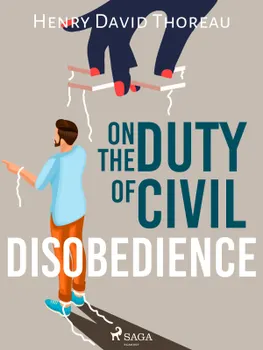
On the Duty of Civil Disobedience

‘Civil Disobedience’ (1849) is an essay by American poet, essayist, and philosopher, Henry David Thoreau, who is best known for his book ‘Walden’ (1854).

In this classic essay, Thoreau famously argues that citizens should not allow their government to overrule their consciences, arguing that their compliance enables governments to make them the agents of injustice.

A lifelong abolitionist, Thoreau was motivated to write this essay by his contempt for slavery and the plight of John Brown. His work went on to influence the political thoughts and actions of both Gandhi and Martin Luther King Jr.

This pioneering, thought-provoking classic, remains as relevant today as when it was first written.

Henry David Thoreau (1817 – 1862) was an American naturalist, poet, essayist and philosopher. A leading transcendentalist, he is best known for his book ‘Walden’ (1854), a deliberation on simple living in natural surroundings, and his advocation of civil liberties in the essay ‘Civil Disobedience’ (1849).

A lifelong abolitionist he praised the writings of Wendell Phillips and defended the abolitionist John Brown, most notably with his works, ‘A Plea for Captain John Brown’ (1859), ‘Remarks After the Hanging of John Brown’ (1859), and ‘The Last Days of John Brown (1860)’.

Thoreau's philosophy of civil disobedience went on to influence writers and leading political figures across the world, including Tolstoy, Gandhi, and Martin Luther King Jr. His pioneering works continue to resonate with people to this day.

Über dieses Buch

‘Civil Disobedience’ (1849) is an essay by American poet, essayist, and philosopher, Henry David Thoreau, who is best known for his book ‘Walden’ (1854).

In this classic essay, Thoreau famously argues that citizens should not allow their government to overrule their consciences, arguing that their compliance enables governments to make them the agents of injustice.

A lifelong abolitionist, Thoreau was motivated to write this essay by his contempt for slavery and the plight of John Brown. His work went on to influence the political thoughts and actions of both Gandhi and Martin Luther King Jr.

This pioneering, thought-provoking classic, remains as relevant today as when it was first written.

Henry David Thoreau (1817 – 1862) was an American naturalist, poet, essayist and philosopher. A leading transcendentalist, he is best known for his book ‘Walden’ (1854), a deliberation on simple living in natural surroundings, and his advocation of civil liberties in the essay ‘Civil Disobedience’ (1849).

A lifelong abolitionist he praised the writings of Wendell Phillips and defended the abolitionist John Brown, most notably with his works, ‘A Plea for Captain John Brown’ (1859), ‘Remarks After the Hanging of John Brown’ (1859), and ‘The Last Days of John Brown (1860)’.

Thoreau's philosophy of civil disobedience went on to influence writers and leading political figures across the world, including Tolstoy, Gandhi, and Martin Luther King Jr. His pioneering works continue to resonate with people to this day.

Starte noch heute mit diesem Buch für CHF 0

  • Hole dir während der Testphase vollen Zugriff auf alle Bücher in der App
  • Keine Verpflichtungen, jederzeit kündbar
Jetzt kostenlos testen
Mehr als 52 000 Menschen haben Nextory im App Store und auf Google Play 5 Sterne gegeben.