4.5(2)

The Phantom of the Opera

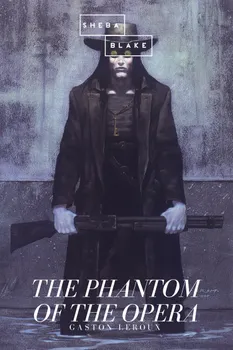
The Phantom of the Opera is a novel by French writer Gaston Leroux. It was first published as a serialisation in Le Gaulois from September 23, 1909, to January 8, 1910. It was published in volume form in late March 1910 by Pierre Lafitte. The novel is partly inspired by historical events at the Paris Opera during the nineteenth century and an apocryphal tale concerning the use of a former ballet pupil's skeleton in Carl Maria von Weber's 1841 production of Der Freischütz. It has been successfully adapted into various stage and film adaptations, most notable of which are the 1925 film depiction featuring Lon Chaney and Andrew Lloyd Webber's 1986 musical. In 1890s Paris, the Palais Garnier is believed to be haunted by an entity known as "The Phantom" or "The Opera Ghost". One day, the stage hand, Joseph Bouquet, is found hanged, presumably by The Phantom, after boasting about him to the corps de ballet. At the same time, Christine Daaé, a young Swedish soprano, has been tutored by what she believes to be "the Angel of Music," sent by her deceased father. On the night of the old manager's retirement, she understudies at the gala performance for the Opera's leading soprano, Carlotta, and her performance is an astonishing success. The Vicomte, Raoul de Changy, who was present at the performance, recognises her as his childhood playmate, and recalls his love for her. He attempts to visit her backstage, when he hears a man speaking to her from inside her dressing room. He investigates the room once Christine leaves, only to find that there's no one else in the room. At Perros-Guirec, Christine meets with Raoul, who confronts her about the voice he heard in her room. Christine tells him about The Angel that has been tutoring her, but he is skeptical and suggests that she might be the victim of a prank. Hurt and angry, she storms off. Christine visits her father's grave one night, where a mysterious figure appears and plays the violin for her.
Über dieses Buch

The Phantom of the Opera is a novel by French writer Gaston Leroux. It was first published as a serialisation in Le Gaulois from September 23, 1909, to January 8, 1910. It was published in volume form in late March 1910 by Pierre Lafitte. The novel is partly inspired by historical events at the Paris Opera during the nineteenth century and an apocryphal tale concerning the use of a former ballet pupil's skeleton in Carl Maria von Weber's 1841 production of Der Freischütz. It has been successfully adapted into various stage and film adaptations, most notable of which are the 1925 film depiction featuring Lon Chaney and Andrew Lloyd Webber's 1986 musical. In 1890s Paris, the Palais Garnier is believed to be haunted by an entity known as "The Phantom" or "The Opera Ghost". One day, the stage hand, Joseph Bouquet, is found hanged, presumably by The Phantom, after boasting about him to the corps de ballet. At the same time, Christine Daaé, a young Swedish soprano, has been tutored by what she believes to be "the Angel of Music," sent by her deceased father. On the night of the old manager's retirement, she understudies at the gala performance for the Opera's leading soprano, Carlotta, and her performance is an astonishing success. The Vicomte, Raoul de Changy, who was present at the performance, recognises her as his childhood playmate, and recalls his love for her. He attempts to visit her backstage, when he hears a man speaking to her from inside her dressing room. He investigates the room once Christine leaves, only to find that there's no one else in the room. At Perros-Guirec, Christine meets with Raoul, who confronts her about the voice he heard in her room. Christine tells him about The Angel that has been tutoring her, but he is skeptical and suggests that she might be the victim of a prank. Hurt and angry, she storms off. Christine visits her father's grave one night, where a mysterious figure appears and plays the violin for her.
Starte noch heute mit diesem Buch für CHF 0

  • Hole dir während der Testphase vollen Zugriff auf alle Bücher in der App
  • Keine Verpflichtungen, jederzeit kündbar
Jetzt kostenlos testen
Mehr als 52 000 Menschen haben Nextory im App Store und auf Google Play 5 Sterne gegeben.

  1. 3.0

    The Phantom of the Opera

    Gaston Leroux

  2. 100 Klassiker der Romantik - Meisterwerke, die man kennen muss : Epische Liebesdramen und große Erwartungen in zeitlosen Geschichten

    Jane Austen, Louisa May Alcott, D. H. Lawrence, Fjodor Dostojewski, William Shakespeare, Hedwig Courths-Mahler, Frances Burney, Charlotte Brontë, Alexandre Dumas, Margaret Mitchell, Charles Dickens, L.M. Montgomery, Eugenie Marlitt, Wilhelmine Heimburg, Elisabeth Bürstenbinder, Stendhal, Johann Wolfgang von Goethe, Walter Scott, Guy De Maupassant, Victor Hugo, George Sand, Leo Tolstoi, Gabriele D’Annunzio, Rudyard Kipling, Gustave Flaubert, Nathaniel Hawthorne, Jean-Jacques Rousseau, Bernardin de Saint-Pierre, F. Scott Fitzgerald, Prosper Mérimée, Edith Wharton, Lena Christ, François-René de Chateaubriand, Stefan Zweig, Alexander Sergejewitsch Puschkin, Ida Boy-Ed, Arthur Schnitzler, Anatole France, Johanna Spyri, George Eliot, Gaston Leroux, Nataly von Eschstruth, Gottfried von Straßburg, Sophie Mereau, Caroline von Wolzogen, Benedikte Naubert, Henry De Vere Stacpoole, Levin Schücking

  3. 4.0

    Das Phantom der Oper

    Gaston Leroux

  4. 4.0

    The Phantom of the Opera

    Gaston Leroux

  5. 3.0

    The Phantom of the Opera

    Gaston Leroux

  6. 3.8

    The Phantom of the Opera

    Gaston Leroux

  7. 3.6

    The Phantom of the Opera

    Gaston Leroux

  8. 3.8

    Le Fantôme de l'Opéra

    Gaston Leroux

  9. Neu

    100 Clásicos de la Literatura Universal

    Francis Scott Fitzgerald, Mary Shelley, Lyman Frank Baum, Louisa May Alcott, Dante Alighieri, Jane Austen, Ambrose Bierce, Emily Brontë, Edgar Rice Burroughs, Lewis Carroll, Wilkie Collins, René Descartes, Charles Dickens, Emily Dickinson, Alexandre Dumas, Gustave Flaubert, Benito Pérez Galdós, Johann Wolfgang von Goethe, Thomas Hardy, E T A Hoffmann, Washington Irving, Henry James, James Joyce, Franz Kafka, Gaston Leroux, Federico García Lorca, H.P. Lovecraft, Publio Virgilio Marón, Lucy Maud Montgomery, John William Polidori, Marco Polo, Antoine de Saint-Exupéry, Emilio Salgari, Walter Scott, Mark Twain, Jules Verne, Julio Verne, H.G. Wells, Edith Wharton, Mary Wollstonecraft, Stefan Zweig, Sun Tzu, Bram Stoker, - Aristoteles, George Bernard Shaw, Henryk Sienkiewicz, Concepción Arenal, Charlotte Brontë, Miguel de Cervantes, G.K. Chesterton, Daniel Defoe, Fyodor Mikhailovich Dostoyevsky, Arthur Conan Doyle, Sigmund Freud, H. Rider Haggard, Homero, Immanuel Kant, Rudyard Kipling, Molière, Friedrich Nietzsche, Fernando de Rojas, Sófocles, William Makepeace Thackeray, León Tolstói, Voltaire, Ramón María del Valle-Inclán, Oscar Wilde, Virginia Woolf

  10. Neu

    100 Obras Maestras Que Debes Leer Antes De Morir

    Francis Scott Fitzgerald, Mary Shelley, Lyman Frank Baum, Edith Nesbit, Dante Alighieri, Jane Austen, Ambrose Bierce, Emily Brontë, Edgar Rice Burroughs, Lewis Carroll, Wilkie Collins, René Descartes, Charles Dickens, Emily Dickinson, Alexandre Dumas, Gustave Flaubert, Benito Pérez Galdós, Johann Wolfgang von Goethe, Thomas Hardy, E T A Hoffmann, Washington Irving, Henry James, James Joyce, Franz Kafka, Gaston Leroux, Federico García Lorca, H.P. Lovecraft, Publio Virgilio Marón, Lucy Maud Montgomery, John William Polidori, Marco Polo, Antoine de Saint-Exupéry, Emilio Salgari, Walter Scott, Mark Twain, Jules Verne, H.G. Wells, Edith Wharton, Mary Wollstonecraft, Fernando de Rojas

  11. Neu

    Le Parfum de la Dame en noir : Un grand roman policier français entre suspense et révélations

    Gaston Leroux

  12. Neu

    30 Mystery Investigation Masterpieces

    Ryūnosuke Akutagawa, Gilbert Keith Chesterton, Wilkie Collins, Arthur Conan Doyle, Hanns Heinz Ewers, Hollis Godfrey, Thomas Hardy, William Le Queux, Maurice Leblanc, Gaston Leroux, Catherine Louisa Pirkis, Edgar Allan Poe, Frank R. Stockton, Mark Twain, Jules Verne, Carolyn Wells, Fred Merrick White