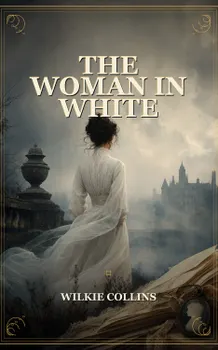
The Woman In White

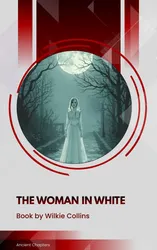
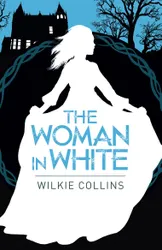
The Woman in White tells the story of Walter Hartright, a young and impoverished drawing teacher who falls in love with his aristocratic pupil, Laura Fairlie. He cannot hope to marry her, however, and she is married off against her will to a baronet, Sir Percival Glyde, who is seeking her fortune. The terms of her marriage settlement prevent Glyde accessing her money while she lives, so together with his deceptively charming and cunning friend, Count Fosco, they hatch an unscrupulous deception to do so nonetheless. In an early 19th Century version of "identity theft," they contrive to fake Laura's death and confine her to a mental asylum. Their plot is eventually uncovered and exposed by Hartright with the help of Laura's resourceful half-sister, Marian Halcombe. The Woman in White was the most popular of Wilkie Collins' novels in the genre then known as "sensation fiction." It has never been out of print and is frequently included in lists of the best novels of all time. Published initially in serial form in 1859–60, it achieved an early and remarkable following, probably because of the strength of its characters, in particular the smooth and charming but utterly wicked villain Count Fosco, and the intelligent and steadfast Marian Halcombe opposed to him. Wilkie Collins (died 1889) was one of the most distinguished authors of the Victorian age. Their work has endured across generations and continues to be read and studied worldwide. As a work of classic literary fiction, The Woman In White exemplifies the narrative craft and social insight that defined great storytelling of its era. Literary fiction of this period was characterized by careful attention to character psychology, social milieu, and the moral questions that animated public discourse.
Über dieses Buch

The Woman in White tells the story of Walter Hartright, a young and impoverished drawing teacher who falls in love with his aristocratic pupil, Laura Fairlie. He cannot hope to marry her, however, and she is married off against her will to a baronet, Sir Percival Glyde, who is seeking her fortune. The terms of her marriage settlement prevent Glyde accessing her money while she lives, so together with his deceptively charming and cunning friend, Count Fosco, they hatch an unscrupulous deception to do so nonetheless. In an early 19th Century version of "identity theft," they contrive to fake Laura's death and confine her to a mental asylum. Their plot is eventually uncovered and exposed by Hartright with the help of Laura's resourceful half-sister, Marian Halcombe. The Woman in White was the most popular of Wilkie Collins' novels in the genre then known as "sensation fiction." It has never been out of print and is frequently included in lists of the best novels of all time. Published initially in serial form in 1859–60, it achieved an early and remarkable following, probably because of the strength of its characters, in particular the smooth and charming but utterly wicked villain Count Fosco, and the intelligent and steadfast Marian Halcombe opposed to him. Wilkie Collins (died 1889) was one of the most distinguished authors of the Victorian age. Their work has endured across generations and continues to be read and studied worldwide. As a work of classic literary fiction, The Woman In White exemplifies the narrative craft and social insight that defined great storytelling of its era. Literary fiction of this period was characterized by careful attention to character psychology, social milieu, and the moral questions that animated public discourse.

Starte noch heute mit diesem Buch für CHF 0

  • Hole dir während der Testphase vollen Zugriff auf alle Bücher in der App
  • Keine Verpflichtungen, jederzeit kündbar
Jetzt kostenlos testen
Mehr als 52 000 Menschen haben Nextory im App Store und auf Google Play 5 Sterne gegeben.

  1. 4.4

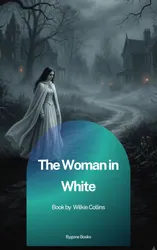
    The Woman in White

    Wilkie Collins

  2. The Rise of Deathwatch : A Journey Through Gothic Horror: Explore 19th Century Dark Romance and Haunting Victorian Mysteries

    Horace Walpole, William Thomas Beckford, Eliza Parsons, William Godwin, Ann Radcliffe, Matthew Gregory Lewis, Charles Brockden Brown, Jane Austen, Mary Shelley, Thomas love Peacock, Edgar Allan Poe, John William Polidori, Washington Irving, Charles Robert Maturin, James Hogg, Victor Hugo, Frederick Marryat, Nikolai Gogol, Charlotte Brontë, Emily Brontë, James Malcolm Rymer, Thomas Peckett Prest, Nathaniel Hawthorne, George Eliot, Wilkie Collins, Robert Louis Stevenson, Charles Dickens, Joseph Sheridan Le Fanu, Arthur Conan Doyle, Oscar Wilde, Guy De Maupassant, Anna Katharine Green, Charlotte Perkins Gilman, Arthur Machen, George MacDonald, John Meade Falkner, H.G. Wells, Richard Marsh, Henry James, Bram Stoker, W. Jacobs, Robert Hugh Benson, Gaston Leroux, Théophile Gautier, William Hope Hodgson, Grant Allen

  3. 100 Clásicos de la Literatura Universal

    Francis Scott Fitzgerald, Mary Shelley, Lyman Frank Baum, Louisa May Alcott, Dante Alighieri, Jane Austen, Ambrose Bierce, Emily Brontë, Edgar Rice Burroughs, Lewis Carroll, Wilkie Collins, René Descartes, Charles Dickens, Emily Dickinson, Alexandre Dumas, Gustave Flaubert, Benito Pérez Galdós, Johann Wolfgang von Goethe, Thomas Hardy, E T A Hoffmann, Washington Irving, Henry James, James Joyce, Franz Kafka, Gaston Leroux, Federico García Lorca, H.P. Lovecraft, Publio Virgilio Marón, Lucy Maud Montgomery, John William Polidori, Marco Polo, Antoine de Saint-Exupéry, Emilio Salgari, Walter Scott, Mark Twain, Jules Verne, Julio Verne, H.G. Wells, Edith Wharton, Mary Wollstonecraft, Stefan Zweig, Sun Tzu, Bram Stoker, - Aristoteles, George Bernard Shaw, Henryk Sienkiewicz, Concepción Arenal, Charlotte Brontë, Miguel de Cervantes, G.K. Chesterton, Daniel Defoe, Fyodor Mikhailovich Dostoyevsky, Arthur Conan Doyle, Sigmund Freud, H. Rider Haggard, Homero, Immanuel Kant, Rudyard Kipling, Molière, Friedrich Nietzsche, Fernando de Rojas, Sófocles, William Makepeace Thackeray, León Tolstói, Voltaire, Ramón María del Valle-Inclán, Oscar Wilde, Virginia Woolf

  4. 100 Obras Maestras Que Debes Leer Antes De Morir

    Francis Scott Fitzgerald, Mary Shelley, Lyman Frank Baum, Edith Nesbit, Dante Alighieri, Jane Austen, Ambrose Bierce, Emily Brontë, Edgar Rice Burroughs, Lewis Carroll, Wilkie Collins, René Descartes, Charles Dickens, Emily Dickinson, Alexandre Dumas, Gustave Flaubert, Benito Pérez Galdós, Johann Wolfgang von Goethe, Thomas Hardy, E T A Hoffmann, Washington Irving, Henry James, James Joyce, Franz Kafka, Gaston Leroux, Federico García Lorca, H.P. Lovecraft, Publio Virgilio Marón, Lucy Maud Montgomery, John William Polidori, Marco Polo, Antoine de Saint-Exupéry, Emilio Salgari, Walter Scott, Mark Twain, Jules Verne, H.G. Wells, Edith Wharton, Mary Wollstonecraft, Fernando de Rojas

  5. Eine verhängnisvolle Erbschaft

    Wilkie Collins

  6. Gesammelte Werke

    Wilkie Collins

  7. Der doppelte Mister Armandale - Zweiter Teil: Roman

    Wilkie Collins

  8. Der doppelte Mister Armandale - Erster Teil: Roman

    Wilkie Collins

  9. Der Fall Basil: Roman

    Wilkie Collins

  10. 30 Suspense and Thriller Masterpieces

    Marcel Allain, Grant Allen, John Buchan, Edgar Rice Burroughs, Gilbert Keith Chesterton, Erskine Childers, Wilkie Collins, Arthur Griffiths, Henry Rider Haggard, Thomas Hardy, Anthony Hope, William Andrew Johnston, Frederic Arnold Kummer, William Le Queux, Frank Norris, Edward Phillips Oppenheim, Mary Roberts Rinehart, Allen Upward, Louis Joseph Vance, Edgar Wallace, Fred Merrick White

  11. 30 Mystery Investigation Masterpieces

    Ryūnosuke Akutagawa, Gilbert Keith Chesterton, Wilkie Collins, Arthur Conan Doyle, Hanns Heinz Ewers, Hollis Godfrey, Thomas Hardy, William Le Queux, Maurice Leblanc, Gaston Leroux, Catherine Louisa Pirkis, Edgar Allan Poe, Frank R. Stockton, Mark Twain, Jules Verne, Carolyn Wells, Fred Merrick White

  12. 4.5

    The Woman in White

    Wilkie Collins