
oder

Finde dein nächstes Lieblingsbuch

  1. Die leiden des jungen werther

    Johann Wolfgang Goethe

  2. Die beliebtesten Liebesromane der Regency-Zeit : Europäische Klassiker über Standesgrenzen, Selbstbestimmung und moderne Gefühle

    Fanny Burney, Jane Austen, Susan Ferrier, Jeffery Farnol, Johann Wolfgang Goethe, Mary Wollstonecraft, Walter Scott, Pierre Ambroise Laclos, Victor Hugo, Dorothea Schlegel, Rafael Sabatini, Joseph von Eichendorff, Eliza Haywood, Maria Edgeworth, Johanna Schopenhauer, Marianne Ehrmann, Sophie Albrecht, Caroline von Wolzogen, Sophie Mereau, Bernardin de Saint-Pierre, Benedikte Naubert, Lew Tolstoi, Sophie von Roche, Germaine de Staël, Christian August Vulpius, Stendhal, Frau von W., Levin Schücking, Hermann Stegemann, Selma Lagerlöf, Emily Brontë, Charlotte Brontë, Anne Brontë, Eufemia von Adlersfeld-Ballestrem

  3. Die größten Klassiker der Regency-Ära : Europäische Romantik zwischen Gesellschaftsroman, Schauerromantik, Volksmärchen und politischer Lyrik

    Walter Scott, Mary Shelley, Jane Austen, Fanny Burney, Mary Wollstonecraft, Lord Byron, Percy Bysshe Shelley, Karoline von Günderrode, Jacob Grimm, Wilhelm Grimm, Washington Irving, Joseph von Eichendorff, E. T. Hoffmann, Friedrich Hölderlin, Heinrich Heine, Friedrich Schiller, Johann Wolfgang Goethe, Eliza Haywood, Maria Edgeworth, Johanna Schopenhauer, Marianne Ehrmann, Sophie Albrecht, Caroline von Wolzogen, Harriette Wilson, Benedikte Naubert, Sophie von Roche, Germaine de Staël, Christian August Vulpius, Johann David Wyse

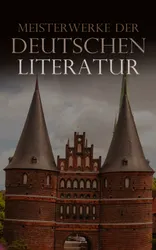
  4. Meisterwerke der deutschen Literatur : Literaturkanon von Mittelalterepos und Klassik bis Moderne, Exil, Philosophie und Psychoanalyse

    Rainer Maria Rilke, Hans Fallada, Annette von Droste-Hülshoff, Stefan Zweig, Franz Kafka, Johann Wolfgang Goethe, Klaus Mann, Hermann Broch, Heinrich Mann, Friedrich Nietzsche, Heinrich Heine, Friedrich Schiller, Robert Musil, Joseph Roth, Heinrich von Kleist, Kurt Tucholsky, Ödön von Horváth, Karl May, Wilhelm Busch, Heinrich Hoffmann, Johanna Spyri, Else Lasker-Schüler, Georg Büchner, Joseph von Eichendorff, Arthur Schnitzler, Theodor Storm, Hugo von Hofmannsthal, Christoph Martin Wieland, E. T. Hoffmann, Gotthold Ephraim Lessing, Frank Wedekind, Gottfried Keller, Theodor Fontane, Clemens Brentano, Achim von Arnim, Jacob Grimm, Wilhelm Grimm, Adelbert von Chamisso, Arthur Schopenhauer, August Klingemann, Novalis, Friedrich Hölderlin, Jean Paul, Sigmund Freud, Elisabeth Langgässer, Gottfried August Bürger, Jakob Michael Lenz, Friedrich Gottlieb Klopstock, Gottfried von Straßburg, Wolfram von Eschenbach, Sebastian Brant, Hermann Bote, Hans Jakob Grimmelshausen, Hildegard von Bingen

  5. 100 Meisterwerke der Weltliteratur - Klassiker die man kennen muss

    Franz Kafka, Fjodor Michailowitsch Dostojewski, Rumi, Platon, Tacitus, Homer, Sigmund Freud, Friedrich Nietzsche, Oswald Spengler, Alfred Adler, Marcus Aurelius, Arthur Schopenhauer, Walt Whitman, Joseph Conrad, Robert Louis Stevenson, Karl May, Alexandre Dumas, James Fenimore Cooper, Arthur Conan Doyle, Edgar Allan Poe, Mary Shelley, O.Henry, Stefan Zweig, Charles Dickens, Jacob Grimm, Wilhelm Grimm, Hans Christian Andersen, Joseph von Eichendorff, Klaus Mann, Johann Wolfgang Goethe, Jane Austen, Emily Brontë, Charlotte Brontë, Else Lasker-Schüler, Heinrich Heine, Herman Melville, Iwan Sergejewitsch Turgenew, Gustav Freytag, Thomas Wolfe, Jonathan Swift, Walter Scott, Nathaniel Hawthorne, Gustave Flaubert, Rainer Maria Rilke, John Galsworthy, Iwan Alexandrowitsch Gontscharow, Oscar Wilde, Lew Wallace, Voltaire, Lewis Carroll, Johanna Spyri, Mark Twain, Selma Lagerlöf, Rudyard Kipling, Jules Verne, Jack London, Miguel de Cervantes, Honoré de Balzac, Emile Zola, Guy De Maupassant, Moliere, Theodor Fontane, Nikolai Gogol, Leo Tolstoi, Anton Pawlowitsch Tschechow, Dante Alighieri, Joseph Roth, Robert Musil, E. T. Hoffmann, Heinrich Mann, Kurt Tucholsky, Heinrich von Kleist, Annette von Droste-Hülshoff, Gottfried Keller, Sophie von Roche, Theodor Storm, William Shakespeare

  6. Die großen Liebes-Klassiker der Weltliteratur : Sturmhöhe, Stolz und Vorurteil, Die Elenden, Jane Eyre, Kameliendame, Anna Karenina, Das Feuer

    Jane Austen, Emily Brontë, Leo Tolstoi, Charlotte Brontë, Alexandre Dumas, Gabriele D’Annunzio, Rudyard Kipling, Stendhal, Eugenie Marlitt, Johann Wolfgang Goethe, Victor Hugo, George Sand, Nathaniel Hawthorne, Pierre Choderlos Laclos, Elisabeth Bürstenbinder

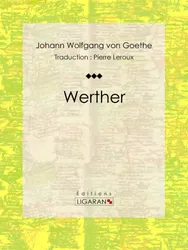
  7. Werther

    Johann Wolfgang Goethe, Ligaran

  8. Die Leiden des jungen Werther (Klassiker der Weltliteratur) (Kommentiert) : Erweiterte Ausgabe. Die Geschichte einer verzweifelten Liebe

    Johann Wolfgang Goethe

  9. Neu

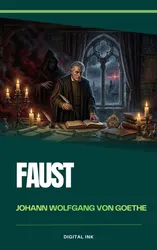
    Faust

    Johann Wolfgang Goethe

  10. Neu

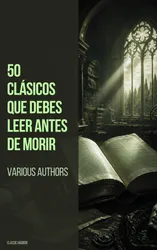
    50 Clásicos que debes leer antes de morir

    Dante Alighieri, - Aristoteles, Jane Austen, Charles Baudelaire, Giovanni Boccaccio, Anne Brontë, C. Collodi, James Fenimore Cooper, Fédor Mikhaïlovitch Dostoïevski, Arthur Conan Doyle, Alexandre Dumas, José de Espronceda, Gustave Flaubert, Sigmund Freud, Benito Pérez Galdós, Kahlil Gibran, Johann Wolfgang Goethe, Victor Hugo, Thomas Hardy, Nathaniel Hawthorne, Vicente Blasco Ibáñez, Washington Irving, James Joyce

  11. Faust : The First Part of the Tragedy

    Johann Wolfgang Goethe

  12. Faust : The First Part of the Tragedy

    Johann Wolfgang Goethe

Über dieses Buch

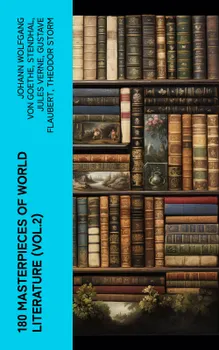
180 Masterpieces of World Literature (Vol.2) gathers an extraordinary constellation of fiction, drama, poetry, philosophy, and social critique, presenting world literature as a sustained conversation across centuries. Its range extends from ancient epic and classical wisdom to Gothic romance, realist and naturalist fiction, adventure narrative, modernist experiment, and political reflection. The volume's significance lies in its breadth: psychological confession, satirical comedy, metaphysical inquiry, imperial encounter, and domestic drama coexist within a single literary field. The contributors represent an immense span of cultural and historical formations: Greco-Roman and Asian antiquity, European Romanticism, Victorian and American realism, Russian moral philosophy, Indian and Chinese literary traditions, fin-de-siècle decadence, and early twentieth-century modernism. As a collective, these writers shaped debates about nationhood, faith, gender, class, empire, and the self. Their varied idioms illuminate how literary movements arise not in isolation but through translation, influence, resistance, and reinvention. This volume is ideal for readers seeking a capacious introduction to the global canon and for scholars wishing to trace continuities across genres and eras. It offers the rare pleasure of encountering many voices in productive juxtaposition, encouraging comparison rather than passive admiration. Read as anthology, archive, and dialogue, it invites sustained exploration of literature's power to educate, unsettle, and enlarge the imagination.

This enriched edition has been carefully crafted to add value to your reading experience.

- An Introduction draws the threads together, discussing why these diverse authors and texts belong in one collection.

- Historical Context explores the cultural and intellectual currents that shaped these works, offering insight into the shared (or contrasting) eras that influenced each writer.

- A combined Synopsis (Selection) briefly outlines the key plots or arguments of the included pieces, helping readers grasp the anthology's overall scope without giving away essential twists.

- A collective Analysis highlights common themes, stylistic variations, and significant crossovers in tone and technique, tying together writers from different backgrounds.

- Reflection questions encourage readers to compare the different voices and perspectives within the collection, fostering a richer understanding of the overarching conversation.