Über dieses Buch

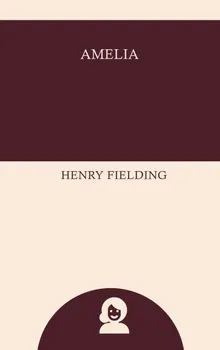
Amelia by Henry Fielding is a powerful and emotionally rich 18th-century novel that explores themes of marriage, loyalty, injustice, and moral endurance in a complex and often unforgiving society. First published in 1751, it is considered Fielding's final and most serious work, marking a shift from the broad satire of his earlier writings to a more reflective and socially conscious narrative style.

The story follows Amelia Booth, a devoted wife and mother whose life is shaped by her unwavering love for her husband, Captain William Booth. Despite his good nature and honorable intentions, Booth is plagued by financial hardship, temptation, and poor judgment, which repeatedly place the family in difficult and precarious situations. Amelia, however, remains a stabilizing force, demonstrating patience, resilience, and quiet strength as she navigates the challenges of domestic life.

As the narrative unfolds, the couple encounters a range of social environments—from debtors' prisons and corrupt legal systems to the superficial glamour of high society. Through these experiences, Fielding exposes the moral contradictions of 18th-century England, highlighting the gap between social appearance and genuine virtue. Amelia's character stands in contrast to the hypocrisy and self-interest that often define those around her.

Henry Fielding uses Amelia to explore deeper questions about justice, gender roles, and the limitations placed on individuals by economic and social structures. Unlike his earlier, more comedic works, this novel adopts a more serious tone, focusing on emotional realism and ethical reflection. At its heart, the book is a study of endurance and integrity in the face of systemic adversity.

Rich in psychological insight and social commentary, Amelia offers a moving portrait of marriage tested by hardship and a society struggling with moral inconsistency. Its detailed depiction of domestic life and institutional corruption makes it one of the most significant early novels in the development of English realism.

Ideal for students of literature, history, and social critique, Amelia remains a compelling exploration of love, duty, and human resilience under pressure.
Starte noch heute mit diesem Buch für CHF 0

  • Hole dir während der Testphase vollen Zugriff auf alle Bücher in der App
  • Keine Verpflichtungen, jederzeit kündbar
Jetzt kostenlos testen
Mehr als 52 000 Menschen haben Nextory im App Store und auf Google Play 5 Sterne gegeben.

Mehr von Henry Fielding

  1. 2.0

    Die Geschichte des Tom Jones - Hörbuch Klassiker

    Henry Fielding, Hörbuch Klassiker

  2. Neu

    History of Tom Jones, a Foundling

    Henry Fielding

  3. The History of Tom Jones, a Foundling : A Foundling's Road to London

    Henry Fielding

  4. The History of Tom Jones, a Foundling : A Foundling's Road to London

    Henry Fielding

  5. A Journey from This World to the Next : A Satire of the Other World

    Henry Fielding

  6. Tom Jones : Geschichte eines Findlings

    Henry Fielding

  7. The History Of Tom Jones A Foundling

    Henry Fielding

  8. History of Tom Jones, a Foundling - Audiobook

    Henry Fielding, Classic Audiobooks

  9. JOSEPH ANDREWS VOL.1

    Henry Fielding

  10. The History of Tom Jones, A Foundling

    Henry Fielding

  11. 100 Meisterwerke der englischen Literatur - Klassiker, die man kennen muss (Kommentiert) : Erweiterte Ausgabe. Hamlet, 1984, Ulysses...

    George Orwell, Charles Dickens, Jane Austen, Katherine Mansfield, H.P. Lovecraft, William Wordsworth, John Keats, Percy Bysshe Shelley, Robert Burns, John Milton, William Shakespeare, Christopher Marlowe, Geoffrey Chaucer, Laurence Sterne, Henry Fielding, Mary Shelley, Emily Brontë, Charlotte Brontë, Anne Brontë, William Makepeace Thackeray, George Eliot, D. H. Lawrence, Herman Melville, Thomas Wolfe, Virginia Woolf, Joseph Conrad, Sinclair Lewis, Walt Whitman, Edgar Allan Poe, Oscar Wilde, Jerome K Jerome, Washington Irving, Bram Stoker, H.G. Wells, Daniel Defoe, Lew Wallace, James Fenimore Cooper, Jonathan Swift, Robert Louis Stevenson, Mark Twain, Lewis Carrol, Edward Bulwer-Lytton, F. Scott Fitzgerald, Arthur Conan Doyle, Jack London, Henry David Thoreau, G.K. Chesterton, Edith Wharton, Henry James, Thomas Hardy, Margaret Mitchell, Kate Chopin, Willa Cather, Charlotte Perkins Gilman, James Joyce, John Galsworthy, Francis Hodgson Burnett, Lucy Maud Montgomery, Louisa May Alcott, Rudyard Kipling

  12. Joseph Andrews

    Henry Fielding