Ancient and Medieval Warfare in the West: The History of Western Europe’s Changing Military Tactics in Antiquity and the Middle Ages

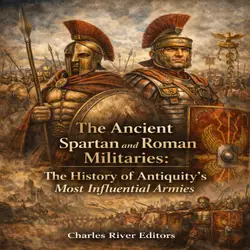
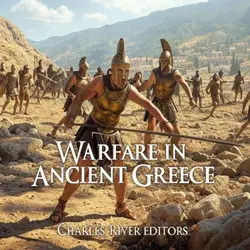
For the Greeks, a hoplite was only as strong as the hoplite next to him; without hoplites on the sides, both flanks were exposed, and heavy infantry units are not mobile. Thus, they implemented the phalanx formation, one of history’s most important military innovations. The phalanx was a line of infantry as wide across as the battlefield dictated, anything from five to 30 men deep, with each rank of men officered by a veteran. The formation also included an additional, expert file-closer at the back of each file, to keep the formation cohesive. The phalanx advanced slowly to maintain its tight formation and unit cohesion, speeding up in unison just before reaching combat.

While the Roman army is rightly famed as an institution, the image of the individual legionary is also an iconic one. The uniformed, disciplined soldier of the late Republic and early Empire is one of the first things many people imagine when they think of Rome. They are the ultimate image of the ancient soldier, their arms and armor instantly recognizable. Their abilities, not only as warriors but also as engineers and administrators, have made them role models for other soldiers through the centuries. In the same vein, their commanders are still celebrated and studied, and generals the world over have tried to emulate the likes of Julius Caesar.

If anything, the one aspect of the Middle Ages that has been romanticized is medieval warfare. Indeed, the Middle Ages have long sparked people’s imaginations thanks to imagery of armored knights battling on horseback and armies of men trying to breach the walls of formidable castles. What is generally forgotten is that medieval warfare was constantly adapting to the times as leaders adopted new techniques and technology, and common infantry became increasingly important throughout the period. By the end of the period, warfare was radically changing thanks to the rise of gunpowder weapons and artillery.
Starte noch heute mit diesem Buch für CHF 0

  • Hole dir während der Testphase vollen Zugriff auf alle Bücher in der App
  • Keine Verpflichtungen, jederzeit kündbar
Jetzt kostenlos testen
Mehr als 52 000 Menschen haben Nextory im App Store und auf Google Play 5 Sterne gegeben.

  1. Benito Mussolini and Francisco Franco: The History of Europe’s Other Fascist Dictators

    Charles River Editors

  2. The Rise and Fall of the Third Reich: The History and Legacy of Nazi Germany under Adolf Hitler

    Charles River Editors

  3. The Age of Sail’s Most Famous Battles: The History of the Naval Engagements that Shaped Europe in the Early Modern Period

    Charles River Editors

  4. The Iranian Revolution and Iran Hostage Crisis: The History of the Events that Broke American Relations with Iran

    Charles River Editors

  5. The Counter-Reformation: The History of the Catholic Church’s Response to the Protestant Reformation

    Charles River Editors

  6. Persepolis and Susa: The History of the Achaemenid Persian Empire’s Capitals

    Charles River Editors

  7. Indian Removal: The History of the Battles and Policies that Displaced Native Americans East of the Mississippi River

    Charles River Editors

  8. The Christianization of Rome: The History of the Roman Empire’s Religious Conversion

    Charles River Editors

  9. The Dawn of the Age of Exploration: The History of the Initial Expeditions that Led to European Imperialism across the Globe

    Charles River Editors

  10. Across the Silk Road and the Atlantic: The History of Marco Polo and Christopher Columbus’ Groundbreaking Voyages

    Charles River Editors

  11. Kublai Khan and Marco Polo: The History of a Unique Partnership at the Court of the Mongol Empire

    Charles River Editors

  12. The Height of the Cold War: The History of the Events that Brought the Soviet Union and United States to the Brink

    Charles River Editors