Aztlán: The History and Mystery of the Aztec’s Ancestral Home

Unlike the Mayans, the Aztecs are not widely viewed or remembered with nuance, in part because their own leader burned extant Aztec writings and rewrote a mythologized history explaining his empire’s dominance less than a century before the Spanish arrived. Naturally, Cortés and other Spaniards depicted the Aztecs as savages greatly in need of conversion to Catholicism, so while the Mayans are remembered for their astronomy, numeral system, and calendar, the Aztecs have primarily been remembered in a far narrower way, despite continuing to be a source of pride to Mexicans through the centuries.

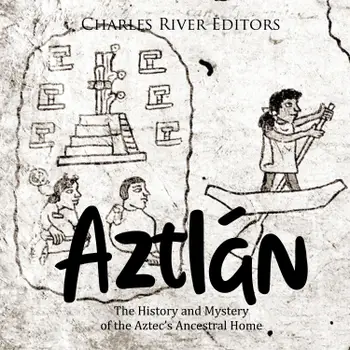
One of the most elusive topics about the Aztecs concern their origins, in particular the city of Aztlán, which is said to be the place from which the Aztecs came. To this day, the physical location of Aztlán has yet to be found, leading to debates about where it could have been, or even whether it was simply a mythological location. For centuries, historians and archaeologists have studied ancient documents and codices in an attempt to physically locate this ancestral city, while other scholars maintain that Aztlán is nothing but an origin myth, and there is not enough evidence in the sources to suggest that it was ever a real place.

Many theories about Aztlán have been proposed throughout the centuries, some strongly based on information provided by historical and archaeological evidence. Others are based purely on conjecture. There are even some who have suggested that Aztlán corresponds to the mythical Atlantis based on a series of similarities in the descriptions of both places. For example, Plato described Atlantis as a city built over a lake, just as Aztlán was said to be.

Über dieses Buch

Unlike the Mayans, the Aztecs are not widely viewed or remembered with nuance, in part because their own leader burned extant Aztec writings and rewrote a mythologized history explaining his empire’s dominance less than a century before the Spanish arrived. Naturally, Cortés and other Spaniards depicted the Aztecs as savages greatly in need of conversion to Catholicism, so while the Mayans are remembered for their astronomy, numeral system, and calendar, the Aztecs have primarily been remembered in a far narrower way, despite continuing to be a source of pride to Mexicans through the centuries.

One of the most elusive topics about the Aztecs concern their origins, in particular the city of Aztlán, which is said to be the place from which the Aztecs came. To this day, the physical location of Aztlán has yet to be found, leading to debates about where it could have been, or even whether it was simply a mythological location. For centuries, historians and archaeologists have studied ancient documents and codices in an attempt to physically locate this ancestral city, while other scholars maintain that Aztlán is nothing but an origin myth, and there is not enough evidence in the sources to suggest that it was ever a real place.

Many theories about Aztlán have been proposed throughout the centuries, some strongly based on information provided by historical and archaeological evidence. Others are based purely on conjecture. There are even some who have suggested that Aztlán corresponds to the mythical Atlantis based on a series of similarities in the descriptions of both places. For example, Plato described Atlantis as a city built over a lake, just as Aztlán was said to be.
Starte noch heute mit diesem Buch für CHF 0

  • Hole dir während der Testphase vollen Zugriff auf alle Bücher in der App
  • Keine Verpflichtungen, jederzeit kündbar
Jetzt kostenlos testen
Mehr als 52 000 Menschen haben Nextory im App Store und auf Google Play 5 Sterne gegeben.

  1. Dick Bong: The Life and Legacy of America’s Greatest Combat Ace during World War II

    Charles River Editors

  2. The Mud Flood Hypothesis: The History of the Conspiracy Theory about the Global Empire of Tartaria

    Charles River Editors

  3. The Age of Sail’s Most Famous Battles: The History of the Naval Engagements that Shaped Europe in the Early Modern Period

    Charles River Editors

  4. The Counter-Reformation: The History of the Catholic Church’s Response to the Protestant Reformation

    Charles River Editors

  5. The Iranian Revolution and Iran Hostage Crisis: The History of the Events that Broke American Relations with Iran

    Charles River Editors

  6. Indian Removal: The History of the Battles and Policies that Displaced Native Americans East of the Mississippi River

    Charles River Editors

  7. The Christianization of Rome: The History of the Roman Empire’s Religious Conversion

    Charles River Editors

  8. Persepolis and Susa: The History of the Achaemenid Persian Empire’s Capitals

    Charles River Editors

  9. Across the Silk Road and the Atlantic: The History of Marco Polo and Christopher Columbus’ Groundbreaking Voyages

    Charles River Editors

  10. The Dawn of the Age of Exploration: The History of the Initial Expeditions that Led to European Imperialism across the Globe

    Charles River Editors

  11. The Height of the Cold War: The History of the Events that Brought the Soviet Union and United States to the Brink

    Charles River Editors

  12. Kublai Khan and Marco Polo: The History of a Unique Partnership at the Court of the Mongol Empire

    Charles River Editors