Über dieses Buch

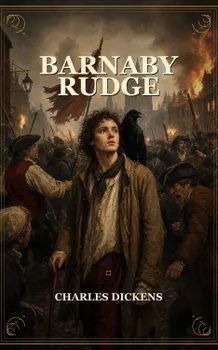
We rely on your support to help us keep producing beautiful, free, and unrestricted editions of literature for the digital age. Will you support our efforts with a donation ? Barnaby Rudge opens in the English village of Chigwell in 1775, where an unsolved double murder casts a long shadow over the local community, and in particular Barnaby Rudge, the son of one of the victims. Five years later, London is consumed by the Gordon Riots of 1780, when Lord George Gordon led the Protestant Association in a protest against increased rights for Catholics that descended into days of mob violence. Into this maelstrom wanders Barnaby, a guileless young man with an intellectual disability, recognized across the countryside by his eccentric dress and by Grip, the raven riding on his shoulder. Easily led and hungry for excitement, Barnaby is drawn into the riots, marching under a banner he doesn't understand towards consequences he can't foresee. Dickens uses the riots to explore what happens when private resentments are given public sanction. The most ideologically passionate figures are revealed to be cynical manipulators, and the violence provides cover for characters pursuing entirely personal vendettas. The novel is also peopled with memorable figures from quieter walks of life, like Dolly Varden, the locksmith's daughter, whose charm and vivacity have made her one of the most celebrated characters Dickens ever wrote. Her father Gabriel provides the novel's moral center, a figure of stubborn decency who refuses to be bent by either domestic bullying or mob coercion, and whose integrity throws the surrounding corruption into sharp relief. Barnaby Rudge was the fifth of Dickens's novels and his first venture into historical fiction, a form he returned to only once more in A Tale of Two Cities . It has long been among his less-read works, though Dickens biographer Peter Ackroyd describes it as one of his most rewarding. The character of Grip the raven notably inspired Edgar Allan Poe to write "The Raven" after reviewing the novel in 1841.
Starte noch heute mit diesem Buch für CHF 0

  • Hole dir während der Testphase vollen Zugriff auf alle Bücher in der App
  • Keine Verpflichtungen, jederzeit kündbar
Jetzt kostenlos testen
Mehr als 52 000 Menschen haben Nextory im App Store und auf Google Play 5 Sterne gegeben.

  1. Neu

    50 Masterpieces you have to read before you die vol: 1

    Louisa May Alcott, Jane Austen, Joseph Conrad, D. H. Lawrence, George Eliot, Leo Tolstoy, James Joyce, Charles Dickens, Bram Stoker, Oscar Wilde, Honoré de Balzac, Edgar Rice Burroughs, Anne Brontë, Charlotte Brontë, Emily Brontë, Lewis Carroll, Willa Cather, Miguel de Cervantes, E. E. Cummings, Fyodor Dostoyevsky, Daniel Defoe, Arthur Conan Doyle, Alexandre Dumas, Gustave Flaubert, Henry James, Victor Hugo

  2. 100 Klassiker der Romantik - Meisterwerke, die man kennen muss : Liebes-, Bildungs- und Gesellschaftsromane der europäischen Literaturgeschichte

    Jane Austen, Louisa May Alcott, D. H. Lawrence, Fjodor Dostojewski, William Shakespeare, Hedwig Courths-Mahler, Frances Burney, Charlotte Brontë, Alexandre Dumas, Margaret Mitchell, Charles Dickens, L.M. Montgomery, Eugenie Marlitt, Wilhelmine Heimburg, Elisabeth Bürstenbinder, Stendhal, Johann Wolfgang Goethe, Walter Scott, Guy De Maupassant, Victor Hugo, George Sand, Leo Tolstoi, Gabriele D’Annunzio, Rudyard Kipling, Gustave Flaubert, Nathaniel Hawthorne, Jean-Jacques Rousseau, Bernardin de Saint-Pierre, F. Scott Fitzgerald, Prosper Mérimée, Edith Wharton, Lena Christ, François-René de Chateaubriand, Stefan Zweig, Alexander Sergejewitsch Puschkin, Ida Boy-Ed, Arthur Schnitzler, Anatole France, Johanna Spyri, George Eliot, Gaston Leroux, Nataly von Eschstruth, Gottfried von Straßburg, Sophie Mereau, Caroline von Wolzogen, Benedikte Naubert, Henry De Stacpoole, Levin Schücking

  3. Bestbewertet
    4.8
    #21

    Eine Weihnachtsgeschichte

    Charles Dickens

  4. Charles Dickens - Die Geschichte zweier Städte, Folge 2: Ist der Retter ein Betrüger?

    Charles Dickens, Joachim von

  5. Charles Dickens - Die Geschichte zweier Städte, Folge 1: Welcher Zeuge sagt die Wahrheit?

    Charles Dickens, Joachim von

  6. 50 Eternal Masterpieces of Gothic Stories : Dracula, Frankenstein, The Black Cat, The Picture Of Dorian Gray...

    Oscar Wilde, Edgar Allan Poe, Charles Dickens, Golden Deer, Joseph Sheridan Le Fanu, Horace Walpope, William Beckford, H.P. Lovecraft, Ann Radcliffe, William Godwin, Charles Brockden Brown, Jane Austen, Mary Shelley, Charles Robert Maturin, Washington Irving, James Hogg, Nathaniel Hawthorne, Victor Hugo, Charlotte Brontë, James Malcom Rymer, Robert Louis Stevenson, Fyodor Dostoyevsky

  7. 1. Nov.
    4.5

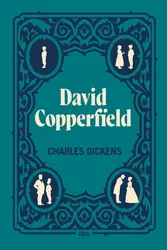
    David Copperfield

    Charles Dickens

  8. 5. Okt.

    Three Ghost Stories

    Charles Dickens

  9. Neu

    100 Clásicos de la Literatura Universal

    Francis Scott Fitzgerald, Mary Shelley, Lyman Frank Baum, Louisa May Alcott, Dante Alighieri, Jane Austen, Ambrose Bierce, Emily Brontë, Edgar Rice Burroughs, Lewis Carroll, Wilkie Collins, René Descartes, Charles Dickens, Emily Dickinson, Alexandre Dumas, Gustave Flaubert, Benito Pérez Galdós, Johann Wolfgang Goethe, Thomas Hardy, E. T. Hoffmann, Washington Irving, Henry James, James Joyce, Franz Kafka

  10. Neu

    100 Obras Maestras Que Debes Leer Antes De Morir

    Francis Scott Fitzgerald, Mary Shelley, L. Frank Baum, Edith Nesbit, Dante Alighieri, Jane Austen, Ambrose Bierce, Emily Brontë, Edgar Rice Burroughs, Lewis Carroll, Wilkie Collins, René Descartes, Charles Dickens, Emily Dickinson, Alexandre Dumas

  11. Neu

    The Complete Novels of Charles Dickens

    Charles Dickens

  12. Neu

    Harvard Classics : The Five-Foot Shelf of Books

    Aesop, Dante Alighieri, Hans Christian Andersen, Augustine of Hippo, Marcus Aurelius, Jane Austen, Francis Bacon, Honoré de Balzac, Francis Beaumont, Bjørnstjerne Bjørnson, Thomas Browne, Robert Browning, John Bunyan, EDMUND BURKE, Robert Burns, Lord Byron, Thomas Carlyle, Benvenuto Cellini, Miguel de Cervantes, Marcus Tullius Cicero, Richard Henry Jr., Charles Darwin, Alphonse Daudet, Thomas Dekker, Charles Dickens, Fyodor Dostoevsky, John Dryden, Charles W. Eliot, George Eliot, Ralph Waldo Emerson, Epictetus, John Fletcher, Theodor Fontane, Benjamin Franklin, Johann Wolfgang Goethe, Oliver Goldsmith, Jacob Grimm, Edward Everett Hale, Bret Harte, Nathaniel Hawthorne, Homer, Victor Hugo, Washington Irving, Henry James, Ben Jonson, Gottfried Keller, Thomas à Kempis, Alexander L. Kielland, Martin Luther, Niccolò Machiavelli, Alessandro Manzoni, Christopher Marlowe, Philip Massinger, Guy De Maupassant, John Stuart Mill, John Milton, Thomas More, William Morris, Alfred de Musset, William Allan Neilson, William Penn, Plato, Pliny the Younger, Plutarch, George Sand, Percy Bysshe Shelley, Richard Brinsley Sheridan, Adam Smith, Laurence Sterne, Theodor Storm, William Makepeace Thackeray, Leo Tolstoy, Ivan Turgenev, Mark Twain, Juan Valera, Virgil, Izaak Walton, John Webster, John Woolman