Über dieses Buch

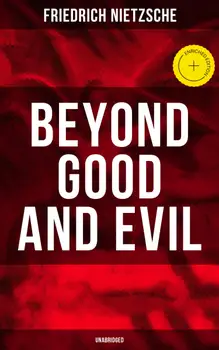
Friedrich Nietzsche's 'Beyond Good and Evil' is a seminal work in the field of philosophy, challenging traditional moral values and exploring the concept of the 'will to power'. Written in a provocative and aphoristic style, the book delves into the complexities of human nature and questions the binary nature of good and evil. Nietzsche's critique of morality and his exploration of the concept of the 'superman' make this book a must-read for anyone interested in existentialism and moral philosophy. The book's literary context lies within the realms of German Romanticism and Enlightenment philosophy, offering a unique perspective on ethics and human behavior. Friedrich Nietzsche, a German philosopher, was known for his controversial and revolutionary ideas that challenged traditional beliefs. His own struggles with health and his disillusionment with societal norms likely influenced his writing of 'Beyond Good and Evil'. Nietzsche's extensive studies in classical philosophy and literature also informed his unique perspective on morality and ethics. I highly recommend 'Beyond Good and Evil' to readers interested in delving deep into the complexities of moral philosophy and questioning traditional values. Nietzsche's thought-provoking work is sure to inspire introspection and critical thinking on the nature of good and evil.

In this enriched edition, we have carefully created added value for your reading experience:

- A succinct Introduction situates the work's timeless appeal and themes.

- The Synopsis outlines the central plot, highlighting key developments without spoiling critical twists.

- A detailed Historical Context immerses you in the era's events and influences that shaped the writing.

- An Author Biography reveals milestones in the author's life, illuminating the personal insights behind the text.

- A thorough Analysis dissects symbols, motifs, and character arcs to unearth underlying meanings.

- Reflection questions prompt you to engage personally with the work's messages, connecting them to modern life.

- Hand‐picked Memorable Quotes shine a spotlight on moments of literary brilliance.

- Interactive footnotes clarify unusual references, historical allusions, and archaic phrases for an effortless, more informed read.

Starte noch heute mit diesem Buch für CHF 0

  • Hole dir während der Testphase vollen Zugriff auf alle Bücher in der App
  • Keine Verpflichtungen, jederzeit kündbar
Jetzt kostenlos testen
Mehr als 52 000 Menschen haben Nextory im App Store und auf Google Play 5 Sterne gegeben.

Mehr von Friedrich Nietzsche

  1. Über Wahrheit und Lüge im außermoralischen Sinn. Ein philosophischer Essay. : Hörbuchzeit: Klassiker der Weltliteratur

    Hörbuchzeit, Friedrich Nietzsche

  2. Friedrich Nietzsche: Götzendämmerung oder Wie man mit dem Hammer philosophiert : Ein Grundlagenwerk der Philosophie

    Friedrich Nietzsche

  3. Meisterwerke der deutschen Literatur : Literaturkanon von Mittelalterepos und Klassik bis Moderne, Exil, Philosophie und Psychoanalyse

    Rainer Maria Rilke, Hans Fallada, Annette von Droste-Hülshoff, Stefan Zweig, Franz Kafka, Johann Wolfgang Goethe, Klaus Mann, Hermann Broch, Heinrich Mann, Friedrich Nietzsche, Heinrich Heine, Friedrich Schiller, Robert Musil, Joseph Roth, Heinrich von Kleist, Kurt Tucholsky, Ödön von Horváth, Karl May, Wilhelm Busch, Heinrich Hoffmann, Johanna Spyri, Else Lasker-Schüler, Georg Büchner, Joseph von Eichendorff, Arthur Schnitzler, Theodor Storm, Hugo von Hofmannsthal, Christoph Martin Wieland, E. T. Hoffmann, Gotthold Ephraim Lessing, Frank Wedekind, Gottfried Keller, Theodor Fontane, Clemens Brentano, Achim von Arnim, Jacob Grimm, Wilhelm Grimm, Adelbert von Chamisso, Arthur Schopenhauer, August Klingemann, Novalis, Friedrich Hölderlin, Jean Paul, Sigmund Freud, Elisabeth Langgässer, Gottfried August Bürger, Jakob Michael Lenz, Friedrich Gottlieb Klopstock, Gottfried von Straßburg, Wolfram von Eschenbach, Sebastian Brant, Hermann Bote, Hans Jakob Grimmelshausen, Hildegard von Bingen

  4. Meisterwerke der Weltphilosophie (Kommentiert) : Erweiterte Ausgabe. Das Gastmahl, Nikomachische Ethik, Also sprach Zarathustra, Utopia, Phänomenologie des Geistes, Neues Organon, Selbstbetrachtungen

    Immanuel Kant, Søren Kierkegaard, Edmund Husserl, Ludwig Wittgenstein, Friedrich Nietzsche, - Konfuzius, Platon, Xenophon, - Aristoteles, Lao Tse, Marcus Tullius Cicero, Marcus Aurelius, Plotin, Thomas von Aquin, Niccolò Machiavelli, Thomas Morus, Giordano Bruno, Michel de Montaigne, René Descartes, Francis Bacon, Blaise Pascal, Baruch Spinoza, Gottfried Wilhelm Leibniz, David Hume, Jean-Jacques Rousseau, Friedrich Schelling, John Locke, Georg Wilhelm Hegel, John Stuart Mill, Karl Marx

  5. 100 Meisterwerke der Weltliteratur - Klassiker die man kennen muss

    Franz Kafka, Fjodor Michailowitsch Dostojewski, Rumi, Platon, Tacitus, Homer, Sigmund Freud, Friedrich Nietzsche, Oswald Spengler, Alfred Adler, Marcus Aurelius, Arthur Schopenhauer, Walt Whitman, Joseph Conrad, Robert Louis Stevenson, Karl May, Alexandre Dumas, James Fenimore Cooper, Arthur Conan Doyle, Edgar Allan Poe, Mary Shelley, O.Henry, Stefan Zweig, Charles Dickens, Jacob Grimm, Wilhelm Grimm, Hans Christian Andersen, Joseph von Eichendorff, Klaus Mann, Johann Wolfgang Goethe, Jane Austen, Emily Brontë, Charlotte Brontë, Else Lasker-Schüler, Heinrich Heine, Herman Melville, Iwan Sergejewitsch Turgenew, Gustav Freytag, Thomas Wolfe, Jonathan Swift, Walter Scott, Nathaniel Hawthorne, Gustave Flaubert, Rainer Maria Rilke, John Galsworthy, Iwan Alexandrowitsch Gontscharow, Oscar Wilde, Lew Wallace, Voltaire, Lewis Carroll, Johanna Spyri, Mark Twain, Selma Lagerlöf, Rudyard Kipling, Jules Verne, Jack London, Miguel de Cervantes, Honoré de Balzac, Emile Zola, Guy De Maupassant, Moliere, Theodor Fontane, Nikolai Gogol, Leo Tolstoi, Anton Pawlowitsch Tschechow, Dante Alighieri, Joseph Roth, Robert Musil, E. T. Hoffmann, Heinrich Mann, Kurt Tucholsky, Heinrich von Kleist, Annette von Droste-Hülshoff, Gottfried Keller, Sophie von Roche, Theodor Storm, William Shakespeare

  6. 13. Jan.

    Thus Spoke Zarathustra

    Friedrich Nietzsche

  7. 6. Dez.

    Ecce Homo : Wie man wird, was man ist

    Friedrich Nietzsche, Sam Rokbuhm

  8. Neu

    Meekness or Strength? : The Christian ideal and the will to power

    Leo Tolstoy, Friedrich Nietzsche

  9. Neu

    Die großen Werke der Philosophie – Weisheit aus drei Jahrtausenden : Von Lao Tse, Konfuzius und Platon bis Seneca, Nietzsche und Steiner – Die große Hörbuch Box über das gute Leben, Freiheit, Moral und den Menschen

    Lao Tse, Marc Aurel, Ètienne de Boétie, Rudolf Steiner, - Konfuzius, Epiktet, Voltaire, Lucius Annaeus Seneca, Ralph Waldo Emerson, Max Stirner, Platon, Friedrich Nietzsche, Francesco Petrarca, Henry David Thoreau, Blaise Pascal, - Aristoteles

  10. Neu

    The Essential Ancient Wisdom Library : 10 Classics of Philosophy, Strategy and Self-Mastery

    Marcus Aurelius, Seneca, Epictetus, Laozi, Plato, Sun Tzu, Musashi Miyamoto, Niccolò Machiavelli, Friedrich Nietzsche, James Allen

  11. Neu

    Thus Spoke Zarathustra: A Book for All and None

    Friedrich Nietzsche

  12. Neu

    Classic Philosophical Encounters Crime and Punishment & Thus Spake Zarathustra

    Fyodor Dostoevsky, Friedrich Nietzsche