Über dieses Buch

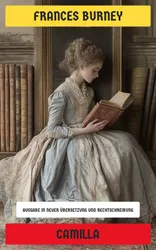
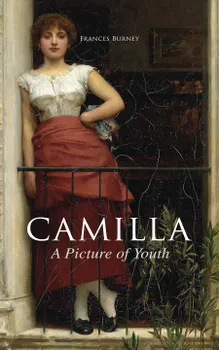
Published in 1796, Camilla, A Picture of Youth is Frances Burney's expansive novel of manners, courtship, and moral education. Centered on Camilla Tyrold and her troubled attachment to Edgar Mandlebert, the novel examines youthful error, social surveillance, female reputation, debt, and the precarious economies of feeling. Its style combines comic social observation with the heightened sensibility of late eighteenth-century fiction, placing it between Richardsonian moral analysis and the emerging domestic realism that would shape Jane Austen. Burney, also known as Fanny Burney, was already celebrated for Evelina and Cecilia when she wrote Camilla. Her acute understanding of polite society was sharpened by her years at the court of Queen Charlotte, her extensive diary-writing, and her experience as a woman negotiating authorship within restrictive cultural expectations. The novel's concern with female judgment, parental authority, and social constraint reflects both her literary ambitions and her lived knowledge of gendered scrutiny. Camilla is recommended to readers interested in the development of the English novel, women's writing, and the emotional politics of courtship. Though capacious and intricate, it rewards patience with psychological subtlety, social satire, and a penetrating account of youth learning to survive the world's judgments.

This enriched edition has been carefully crafted to add value to your reading experience.

- A succinct Introduction situates the work's timeless appeal and themes.

- The Synopsis outlines the central plot, highlighting key developments without spoiling critical twists.

- A detailed Historical Context immerses you in the era's events and influences that shaped the writing.

- A thorough Analysis dissects symbols, motifs, and character arcs to unearth underlying meanings.

- Reflection questions prompt you to engage personally with the work's messages, connecting them to modern life.

- Hand‐picked Memorable Quotes shine a spotlight on moments of literary brilliance.

- Interactive footnotes clarify unusual references, historical allusions, and archaic phrases for an effortless, more informed read.
Starte noch heute mit diesem Buch für CHF 0

  • Hole dir während der Testphase vollen Zugriff auf alle Bücher in der App
  • Keine Verpflichtungen, jederzeit kündbar
Jetzt kostenlos testen
Mehr als 52 000 Menschen haben Nextory im App Store und auf Google Play 5 Sterne gegeben.

Mehr von Frances Burney

  1. 100 Weibliche Meisterwerke - Klassiker, die man kennen muss : Eine Anthologie feministischer Klassikerinnen zwischen Weltliteratur, Essay und Roman

    Virginia Woolf, Jane Austen, Louisa May Alcott, George Sand, Mary Shelley, Colette, Charlotte Brontë, Emily Brontë, Anne Brontë, Sophie von Roche, Mary Wollstonecraft, Hedwig Dohm, Elizabeth Burgoyne Corbett, Ann Radcliffe, Charlotte Perkins Gilman, L.M. Montgomery, Frances Burney, Johanna Schopenhauer, George Eliot, Hedwig Courths-Mahler, Gabriele Reuter, Wilhelmine von Hillern, Luise Ahlborn, Lou Andreas-Salomé, Margaret Mitchell, Edith Wharton, Miles Franklin, Willa Cather, Elizabeth Gaskell, Elizabeth von Arnim, Franziska Gräfin Reventlow, Alice Berend, Germaine de Staël, Dorothea Schlegel, Emmuska Orczy, Eugenie Marlitt, Wilhelmine Heimburg, Lena Christ, Ida Boy-Ed, Nataly von Eschstruth, Marianne Ehrmann, Caroline von Wolzogen, Benedikte Naubert, Karoline von Günderrode, Annette von Droste-Hülshoff, Else Lasker-Schüler, Johanna Spyri, Elisabeth Langgässer, Marie-Madeleine de Fayette, Frances Hodgson Burnett, Harriet Beecher Stowe, Else Ury, Emmy von Rhoden, Beatrix Potter, Selma Lagerlöf, Anna Sewell, Ada Langworthy Collier, PrinzessinDer Ling, Margaret Oliphant, Katharina die Grosse, Malwida von Meysenbug, Louise Aston, Louise Otto, Rosa Luxemburg, Clara Zetkin, Ricarda Huch, Bertha von Suttner, Sappho -, Elizabeth Barrett Browning, Teresa von Ávila, Florence Scovel Shinn, Elizabeth Cady Stanton, Hildegard von Bingen, Edith Stein

  2. Evelina : The 18th-Century Novel That Invented the Romantic Comedy

    Frances Burney

  3. Evelina

    Frances Burney

  4. Evelina

    Frances Burney

  5. Evelina

    Frances Burney

  6. 50 Regency-Romantik-Romane : Europäische Liebes-, Gesellschafts- und Schauerromane über Stand, Ehe und weibliche Selbstbestimmung

    Jane Austen, Susan Ferrier, Frances Burney, Eliza Haywood, Jeffery Farnol, Walter Scott, Mary Wollstonecraft, Johanna Schopenhauer, Victor Hugo, Lew Tolstoi, Pierre Ambroise Laclos, Sophie Mereau, Emily Brontë, Marianne Ehrmann, Germaine de Staël, Caroline von Wolzogen, Benedikte Naubert, Sophie von Roche, Dorothea Schlegel, Bernardin de Saint-Pierre, Charlotte Brontë, Anne Brontë, Rafael Sabatini, Christian August Vulpius, Hermann Stegemann

  7. Evelina : A Journey of Wit, Romance, and Social Grace

    Frances Burney

  8. Fanny Burney - Sämtliche Romane : Englische Gesellschaftsromane über weibliche Erziehung, höfische Gesellschaft, Rang, Vermögen und Geschlechterordnung

    Frances Burney

  9. Gesammelte Werke : Romane, Gesellschaftssatire und autobiographische Prosa aus dem georgianischen England – weibliche Autorschaft zwischen Standesgrenzen und Hofleben

    Frances Burney

  10. Evelina : Ausgabe in neuer Übersetzung und Rechtschreibung

    Frances Burney

  11. Camilla : Ausgabe in neuer Übersetzung und Rechtschreibung

    Frances Burney

  12. 100 Klassiker der Romantik - Meisterwerke, die man kennen muss : Liebes-, Bildungs- und Gesellschaftsromane der europäischen Literaturgeschichte

    Jane Austen, Louisa May Alcott, D. H. Lawrence, Fjodor Dostojewski, William Shakespeare, Hedwig Courths-Mahler, Frances Burney, Charlotte Brontë, Alexandre Dumas, Margaret Mitchell, Charles Dickens, L.M. Montgomery, Eugenie Marlitt, Wilhelmine Heimburg, Elisabeth Bürstenbinder, Stendhal, Johann Wolfgang Goethe, Walter Scott, Guy De Maupassant, Victor Hugo, George Sand, Leo Tolstoi, Gabriele D’Annunzio, Rudyard Kipling, Gustave Flaubert, Nathaniel Hawthorne, Jean-Jacques Rousseau, Bernardin de Saint-Pierre, F. Scott Fitzgerald, Prosper Mérimée, Edith Wharton, Lena Christ, François-René de Chateaubriand, Stefan Zweig, Alexander Sergejewitsch Puschkin, Ida Boy-Ed, Arthur Schnitzler, Anatole France, Johanna Spyri, George Eliot, Gaston Leroux, Nataly von Eschstruth, Gottfried von Straßburg, Sophie Mereau, Caroline von Wolzogen, Benedikte Naubert, Henry De Stacpoole, Levin Schücking