Über dieses Buch

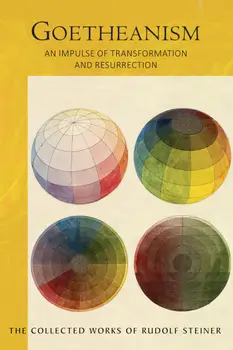
'There will be a resurrection – a resurrection that should not be imagined politically… but it will be a resurrection. Goetheanism still rests in the grave as far as external culture is concerned. But Goetheanism must rise again.' In the first winter following the Great War, Rudolf Steiner appealed to the spirit of Central Europe – which he characterized as Goetheanism – that had been languishing for decades. Only such a spiritual force could provide answers to the pressing social, national and international questions of the time. A new constellation of polar, hostile opposition had emerged after the war, with the East and Bolshevism on one side, and the victorious West and Americanism on the other. In the middle, with no apparent role or hope for the future, was the defeated Central Europe. But this 'centre', beseeched Steiner, should not become a vacuum. Rather, it needs to discover its true, world-historical task.In this context, with deep seriousness and urgency, Rudolf Steiner speaks of the work of Goetheanism, which begins with understanding the threefold human being and leads to threefolding the social organism. Steiner goes on to describe the decisive role of the consciousness soul in the present epoch, and how Schiller's Aesthetic Letters and Goethe's Fairy Tale relate to contemporary challenges. He discusses a multitude of seemingly diverse but interrelated themes, such as the migration of peoples in the past and present, the thinking of John of the Cross, and the modern path of spirit cognition. The first English publication of these lectures features an introduction by Christian von Arnim, notes and an index. Twelve lectures, Dornach, Jan.–Feb. 1919, GA 188
Starte noch heute mit diesem Buch für CHF 0

  • Hole dir während der Testphase vollen Zugriff auf alle Bücher in der App
  • Keine Verpflichtungen, jederzeit kündbar
Jetzt kostenlos testen
Mehr als 52 000 Menschen haben Nextory im App Store und auf Google Play 5 Sterne gegeben.

Mehr von Rudolf Steiner

  1. #13

    Wie erlangt man Erkenntnisse der höheren Welten

    Rudolf Steiner

  2. 14. Nov.

    Die großen Werke der Philosophie – Weisheit aus drei Jahrtausenden : Von Lao Tse, Konfuzius und Platon bis Seneca, Nietzsche und Steiner – Die große Hörbuch Box über das gute Leben, Freiheit, Moral und den Menschen

    Lao Tse, Marc Aurel, Ètienne de Boétie, Rudolf Steiner, - Konfuzius, Epiktet, Voltaire, Lucius Annaeus Seneca, Ralph Waldo Emerson, Max Stirner, Platon, Friedrich Nietzsche, Francesco Petrarca, Henry David Thoreau, Blaise Pascal, - Aristoteles

  3. 29. Okt.
    #232

    MYSTERY KNOWLEDGE AND MYSTERY CENTRES

    Rudolf Steiner

  4. Neu
    #185

    FORMING SOCIAL JUDGEMENT : Documents, Propaganda and Spiritual Reality

    Rudolf Steiner

  5. Neu
    #192

    SOCIAL AND EDUCATIONAL QUESTIONS : A Spiritual-Scientific Approach

    Rudolf Steiner

  6. Neu

    Wie erlangt man Erkenntnisse der höheren Welten? Ein Grundlagenwerk der Anthroposophie. : Hörbuchzeit: Klassiker der Weltliteratur

    Hörbuchzeit, Rudolf Steiner

  7. Neu

    Rudolf Steiner : Ausgesprochenes und Unausgesprochenes im Denken, Schauen, Sinnen einer Reihe deutscher und österreichischer Persönlichkeiten. Ein Grundlagenwerk der Anthroposophie

    Rudolf Steiner

  8. Neu

    How to Know Higher Worlds : A Modern Path of Initiation (Classics in Anthroposophy)

    Rudolf Steiner

  9. Un chemin vers la connaissance de Soi : huit méditations

    Rudolf Steiner

  10. Theosophie – Einführung in übersinnliche Welterkenntnis und Menschenbestimmung. Ein Grundlagenwerk der Anthroposophie. : Hörbuchzeit: Klassiker der Weltliteratur

    Hörbuchzeit, Rudolf Steiner

  11. Mystics of the Renaissance and their relation to modern thought : Meister Eckhart, Tauler, Paracelsus, Jacob Boehme, Giordano Bruno…

    Rudolf Steiner

  12. Rudolf Steiner: Meisterwerke der Erzählkunst : Klassiker der Weltliteratur: Philosophisches und Pädagogisches

    Rudolf Steiner