Über dieses Buch

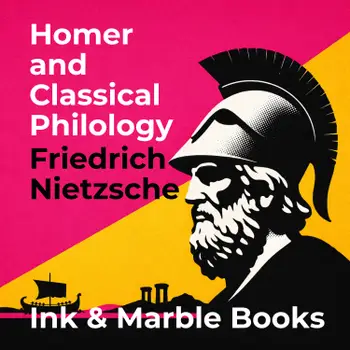
A bold question sits at the heart of this audiobook: what do we really mean when we say Homer.

In Homer and Classical Philology, Friedrich Nietzsche speaks as a young classical scholar, bringing sharp attention to how scholarship shapes the ancient world we think we know. The listening experience is compact, concentrated, and argumentative, moving through the problems of authorship, tradition, and interpretation with a tone that is both learned and surprisingly lively. Rather than offering a simple summary of epic poetry, Nietzsche turns the spotlight onto the methods and assumptions of classical studies, asking what philology is for and what it can legitimately claim.

This is essential listening for anyone drawn to Homeric studies, Greek literature, classical scholarship, and the history of ideas. You can expect a focused academic lecture that connects textual criticism, literary interpretation, and the broader aims of the humanities, while also revealing an early phase of Nietzsche as a philologist. Whether you come for ancient epic, the Homeric question, or the foundations of classical philology, this audiobook offers a clear window into how a great mind frames a scholarly problem.

Press play and enter the debate that still shapes how we read the classics.

Starte noch heute mit diesem Buch für CHF 0

  • Hole dir während der Testphase vollen Zugriff auf alle Bücher in der App
  • Keine Verpflichtungen, jederzeit kündbar
Jetzt kostenlos testen
Mehr als 52 000 Menschen haben Nextory im App Store und auf Google Play 5 Sterne gegeben.

Mehr von Friedrich Nietzsche

  1. Friedrich Nietzsche: Götzendämmerung oder Wie man mit dem Hammer philosophiert : Ein Grundlagenwerk der Philosophie

    Friedrich Nietzsche

  2. Meisterwerke der deutschen Literatur : Literaturkanon von Mittelalterepos und Klassik bis Moderne, Exil, Philosophie und Psychoanalyse

    Rainer Maria Rilke, Hans Fallada, Annette von Droste-Hülshoff, Stefan Zweig, Franz Kafka, Johann Wolfgang Goethe, Klaus Mann, Hermann Broch, Heinrich Mann, Friedrich Nietzsche, Heinrich Heine, Friedrich Schiller, Robert Musil, Joseph Roth, Heinrich von Kleist, Kurt Tucholsky, Ödön von Horváth, Karl May, Wilhelm Busch, Heinrich Hoffmann, Johanna Spyri, Else Lasker-Schüler, Georg Büchner, Joseph von Eichendorff, Arthur Schnitzler, Theodor Storm, Hugo von Hofmannsthal, Christoph Martin Wieland, E. T. Hoffmann, Gotthold Ephraim Lessing, Frank Wedekind, Gottfried Keller, Theodor Fontane, Clemens Brentano, Achim von Arnim, Jacob Grimm, Wilhelm Grimm, Adelbert von Chamisso, Arthur Schopenhauer, August Klingemann, Novalis, Friedrich Hölderlin, Jean Paul, Sigmund Freud, Elisabeth Langgässer, Gottfried August Bürger, Jakob Michael Lenz, Friedrich Gottlieb Klopstock, Gottfried von Straßburg, Wolfram von Eschenbach, Sebastian Brant, Hermann Bote, Hans Jakob Grimmelshausen, Hildegard von Bingen

  3. 100 Meisterwerke der Weltliteratur - Klassiker die man kennen muss

    Franz Kafka, Fjodor Michailowitsch Dostojewski, Rumi, Platon, Tacitus, Homer, Sigmund Freud, Friedrich Nietzsche, Oswald Spengler, Alfred Adler, Marcus Aurelius, Arthur Schopenhauer, Walt Whitman, Joseph Conrad, Robert Louis Stevenson, Karl May, Alexandre Dumas, James Fenimore Cooper, Arthur Conan Doyle, Edgar Allan Poe, Mary Shelley, O.Henry, Stefan Zweig, Charles Dickens, Jacob Grimm, Wilhelm Grimm, Hans Christian Andersen, Joseph von Eichendorff, Klaus Mann, Johann Wolfgang Goethe, Jane Austen, Emily Brontë, Charlotte Brontë, Else Lasker-Schüler, Heinrich Heine, Herman Melville, Iwan Sergejewitsch Turgenew, Gustav Freytag, Thomas Wolfe, Jonathan Swift, Walter Scott, Nathaniel Hawthorne, Gustave Flaubert, Rainer Maria Rilke, John Galsworthy, Iwan Alexandrowitsch Gontscharow, Oscar Wilde, Lew Wallace, Voltaire, Lewis Carroll, Johanna Spyri, Mark Twain, Selma Lagerlöf, Rudyard Kipling, Jules Verne, Jack London, Miguel de Cervantes, Honoré de Balzac, Emile Zola, Guy De Maupassant, Moliere, Theodor Fontane, Nikolai Gogol, Leo Tolstoi, Anton Pawlowitsch Tschechow, Dante Alighieri, Joseph Roth, Robert Musil, E. T. Hoffmann, Heinrich Mann, Kurt Tucholsky, Heinrich von Kleist, Annette von Droste-Hülshoff, Gottfried Keller, Sophie von Roche, Theodor Storm, William Shakespeare

  4. 6. Dez.

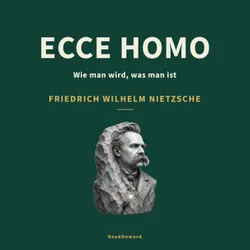
    Ecce Homo : Wie man wird, was man ist

    Friedrich Nietzsche, Sam Rokbuhm

  5. Neu

    Die großen Werke der Philosophie – Weisheit aus drei Jahrtausenden : Von Lao Tse, Konfuzius und Platon bis Seneca, Nietzsche und Steiner – Die große Hörbuch Box über das gute Leben, Freiheit, Moral und den Menschen

    Lao Tse, Marc Aurel, Ètienne de Boétie, Rudolf Steiner, - Konfuzius, Epiktet, Voltaire, Lucius Annaeus Seneca, Ralph Waldo Emerson, Max Stirner, Platon, Friedrich Nietzsche, Francesco Petrarca, Henry David Thoreau, Blaise Pascal, - Aristoteles

  6. Neu

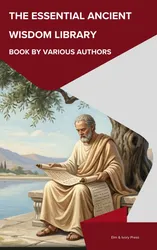
    The Essential Ancient Wisdom Library : 10 Classics of Philosophy, Strategy and Self-Mastery

    Marcus Aurelius, Seneca, Epictetus, Laozi, Plato, Sun Tzu, Musashi Miyamoto, Niccolò Machiavelli, Friedrich Nietzsche, James Allen

  7. Neu

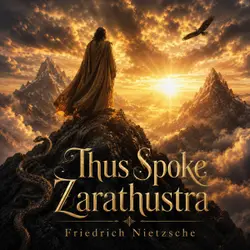
    Thus Spoke Zarathustra: A Book for All and None

    Friedrich Nietzsche

  8. 1.0

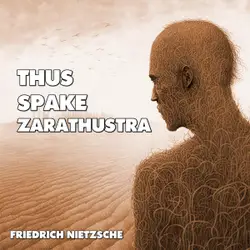
    Thus Spake Zarathustra

    Friedrich Nietzsche

  9. Neu

    Classic Philosophical Encounters Crime and Punishment & Thus Spake Zarathustra

    Fyodor Dostoevsky, Friedrich Nietzsche

  10. Ecce Homo: How One Becomes What One Is - Audiobook

    Friedrich Nietzsche, Classic Audiobooks

  11. Jenseits von Gut und Böse : Vorspiel einer Philosophie der Zukunft

    Friedrich Nietzsche

  12. Zur Genealogie der Moral : Eine Streitschrift

    Friedrich Nietzsche