Über dieses Buch

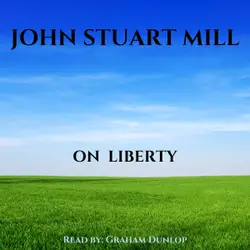
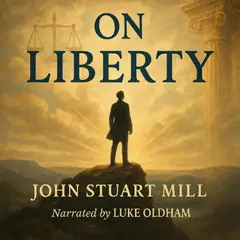
On Liberty by John Stuart Mill is a powerful and enduring philosophical essay that explores the nature and boundaries of individual freedom in society. Written in 1859 during a period of political and intellectual upheaval, Mill makes an impassioned case for the sanctity of personal liberty—arguing that individuals should be free to act, think, and express themselves as they choose, so long as they do not harm others.

Mill’s central thesis, often referred to as the "harm principle," remains one of the cornerstones of liberal political thought: that the only justification for societal or governmental interference in a person’s life is to prevent harm to others. With remarkable clarity, he examines the relationship between authority and autonomy, tackling issues like free speech, individuality, moral policing, and the role of dissent in democratic society.

Narrated with depth and thoughtfulness by Luke Oldham, this audiobook brings to life one of the most influential works in political philosophy—a timeless defense of freedom and a clarion call for the courage to think for oneself.

Starte noch heute mit diesem Buch für CHF 0

  • Hole dir während der Testphase vollen Zugriff auf alle Bücher in der App
  • Keine Verpflichtungen, jederzeit kündbar
Jetzt kostenlos testen
Mehr als 52 000 Menschen haben Nextory im App Store und auf Google Play 5 Sterne gegeben.

Mehr von John Stuart Mill

  1. Neu

    On Liberty

    John Stuart Mill

  2. Neu

    Autobiography

    John Stuart Mill

  3. Neu
    3.0

    Utilitarianism

    John Stuart Mill

  4. Neu

    The Contest in America

    John Stuart Mill

  5. Neu

    The Subjection of Women

    John Stuart Mill

  6. On Liberty : The Limits of the Power of Society Over the Individual

    John Stuart Mill

  7. On Liberty : The Limits of the Power of Society Over the Individual

    John Stuart Mill

  8. Harvard Classics : The Five-Foot Shelf of Books

    Aesop, Dante Alighieri, Hans Christian Andersen, Augustine of Hippo, Marcus Aurelius, Jane Austen, Francis Bacon, Honoré de Balzac, Francis Beaumont, Bjørnstjerne Bjørnson, Thomas Browne, Robert Browning, John Bunyan, EDMUND BURKE, Robert Burns, Lord Byron, Thomas Carlyle, Benvenuto Cellini, Miguel de Cervantes, Marcus Tullius Cicero, Richard Henry Jr., Charles Darwin, Alphonse Daudet, Thomas Dekker, Charles Dickens, Fyodor Dostoevsky, John Dryden, Charles W. Eliot, George Eliot, Ralph Waldo Emerson, Epictetus, John Fletcher, Theodor Fontane, Benjamin Franklin, Johann Wolfgang Goethe, Oliver Goldsmith, Jacob Grimm, Edward Everett Hale, Bret Harte, Nathaniel Hawthorne, Homer, Victor Hugo, Washington Irving, Henry James, Ben Jonson, Gottfried Keller, Thomas à Kempis, Alexander L. Kielland, Martin Luther, Niccolò Machiavelli, Alessandro Manzoni, Christopher Marlowe, Philip Massinger, Guy De Maupassant, John Stuart Mill, John Milton, Thomas More, William Morris, Alfred de Musset, William Allan Neilson, William Penn, Plato, Pliny the Younger, Plutarch, George Sand, Percy Bysshe Shelley, Richard Brinsley Sheridan, Adam Smith, Laurence Sterne, Theodor Storm, William Makepeace Thackeray, Leo Tolstoy, Ivan Turgenev, Mark Twain, Juan Valera, Virgil, Izaak Walton, John Webster, John Woolman

  9. On liberty

    John Stuart Mill

  10. Speech in Favor of Capital Punishment

    John Stuart Mill

  11. Auguste Comte and Positivism

    John Stuart Mill