Über dieses Buch

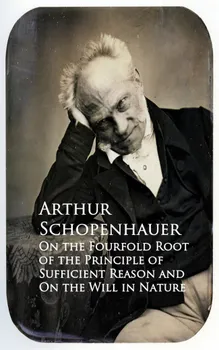
"Just as if Kant had never existed, the Principle of Sufficient Reason still remains with Fichte what it was with all the Schoolmen, an œterna veritas: that is to say, just as the Gods of the ancients were still ruled over by eternal Destiny, so was the God of the Schoolmen still ruled over by these œterna veritates, i.e., by the metaphysical, mathematical, and metalogical truths, and even, according to some, by the validity of the moral law. These veritates alone were unconditioned by anything, and God, as well as the world, existed through their necessity. Thus with Fichte the Ego, according to the Principle of Sufficient Reason, is the reason of the world or of the Non-Ego, of the Object, which is the product or result of the Ego itself. He took good care, therefore, neither to examine nor to check the Principle of Sufficient Reason any farther. But if I had to indicate the particular form of this principle by which Fichte was guided in making the Ego spin the Non-Ego out of itself, as the spider its web, I should point to the Principle of the Sufficient Reason of Being in Space; for nothing but a reference to this principle gives any sort of sense or meaning to his laboured deductions of the way in which the Ego produces and manufactures the Non-Ego out of itself, which form the contents of the most senseless and—simply on this account—most tiresome book ever written. The only interest this Fichteian philosophy has for us at all—otherwise it would not be worth mentioning—lies in its being the tardy appearance of the real antithesis to ancient Materialism, which was the most consistent starting from the Object, just as Fichte's philosophy was the most consistent starting from the Subject.
Starte noch heute mit diesem Buch für CHF 0

  • Hole dir während der Testphase vollen Zugriff auf alle Bücher in der App
  • Keine Verpflichtungen, jederzeit kündbar
Jetzt kostenlos testen
Mehr als 52 000 Menschen haben Nextory im App Store und auf Google Play 5 Sterne gegeben.

Mehr von Arthur Schopenhauer

  1. 1.5

    Arthur Schopenhauer: Die Kunst Recht zu behalten : Ein Grundlagenwerk der Philosophie

    Arthur Schopenhauer

  2. Meisterwerke der deutschen Literatur : Literaturkanon von Mittelalterepos und Klassik bis Moderne, Exil, Philosophie und Psychoanalyse

    Rainer Maria Rilke, Hans Fallada, Annette von Droste-Hülshoff, Stefan Zweig, Franz Kafka, Johann Wolfgang Goethe, Klaus Mann, Hermann Broch, Heinrich Mann, Friedrich Nietzsche, Heinrich Heine, Friedrich Schiller, Robert Musil, Joseph Roth, Heinrich von Kleist, Kurt Tucholsky, Ödön von Horváth, Karl May, Wilhelm Busch, Heinrich Hoffmann, Johanna Spyri, Else Lasker-Schüler, Georg Büchner, Joseph von Eichendorff, Arthur Schnitzler, Theodor Storm, Hugo von Hofmannsthal, Christoph Martin Wieland, E. T. Hoffmann, Gotthold Ephraim Lessing, Frank Wedekind, Gottfried Keller, Theodor Fontane, Clemens Brentano, Achim von Arnim, Jacob Grimm, Wilhelm Grimm, Adelbert von Chamisso, Arthur Schopenhauer, August Klingemann, Novalis, Friedrich Hölderlin, Jean Paul, Sigmund Freud, Elisabeth Langgässer, Gottfried August Bürger, Jakob Michael Lenz, Friedrich Gottlieb Klopstock, Gottfried von Straßburg, Wolfram von Eschenbach, Sebastian Brant, Hermann Bote, Hans Jakob Grimmelshausen, Hildegard von Bingen

  3. 100 Meisterwerke der Weltliteratur - Klassiker die man kennen muss

    Franz Kafka, Fjodor Michailowitsch Dostojewski, Rumi, Platon, Tacitus, Homer, Sigmund Freud, Friedrich Nietzsche, Oswald Spengler, Alfred Adler, Marcus Aurelius, Arthur Schopenhauer, Walt Whitman, Joseph Conrad, Robert Louis Stevenson, Karl May, Alexandre Dumas, James Fenimore Cooper, Arthur Conan Doyle, Edgar Allan Poe, Mary Shelley, O.Henry, Stefan Zweig, Charles Dickens, Jacob Grimm, Wilhelm Grimm, Hans Christian Andersen, Joseph von Eichendorff, Klaus Mann, Johann Wolfgang Goethe, Jane Austen, Emily Brontë, Charlotte Brontë, Else Lasker-Schüler, Heinrich Heine, Herman Melville, Iwan Sergejewitsch Turgenew, Gustav Freytag, Thomas Wolfe, Jonathan Swift, Walter Scott, Nathaniel Hawthorne, Gustave Flaubert, Rainer Maria Rilke, John Galsworthy, Iwan Alexandrowitsch Gontscharow, Oscar Wilde, Lew Wallace, Voltaire, Lewis Carroll, Johanna Spyri, Mark Twain, Selma Lagerlöf, Rudyard Kipling, Jules Verne, Jack London, Miguel de Cervantes, Honoré de Balzac, Emile Zola, Guy De Maupassant, Moliere, Theodor Fontane, Nikolai Gogol, Leo Tolstoi, Anton Pawlowitsch Tschechow, Dante Alighieri, Joseph Roth, Robert Musil, E. T. Hoffmann, Heinrich Mann, Kurt Tucholsky, Heinrich von Kleist, Annette von Droste-Hülshoff, Gottfried Keller, Sophie von Roche, Theodor Storm, William Shakespeare

  4. 6. Dez.
    #2

    Allein bist Du frei : 56 Provokationen gegen die Angst, allein zu sein

    Kasimir Brandt, Arthur Schopenhauer

  5. 24. Nov.

    Arthur Schopenhauer : Zwei kurze Essays. Ungekürzt gelesen von Jürgen Fritsche

    Arthur Schopenhauer

  6. Aphorismen zur Lebensweisheit : Aus "Parerga und Paralipomena"

    Arthur Schopenhauer

  7. Die Welt als Wille und Vorstellung — Erster Band : Erster Band

    Arthur Schopenhauer

  8. 2.0

    Die Kunst, Recht zu behalten

    Arthur Schopenhauer

  9. 3.0

    Über die Weiber

    Arthur Schopenhauer

  10. Über die Weiber / Die Stachelschweine

    Arthur Schopenhauer

  11. #1

    Die Welt als Wille und Vorstellung. : Band I

    Arthur Schopenhauer

  12. Über das Mitleid als Grundlage der Moral : — (aus "Über die Grundlage der Moral", 1840)

    Arthur Schopenhauer