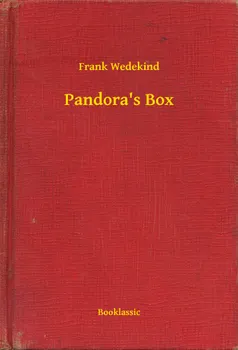
Pandora's Box

Pandora's Box (1904) (Die Büchse der Pandora) is a play by the German dramatist Frank Wedekind. It forms the second part of his pairing of 'Lulu' plays (the first is Earth Spirit [1895]), both of which depict a society "riven by the demands of lust and greed".

G. W. Pabst directed a silent film version (Pandora's Box), which was loosely based on the play, in 1929. Both plays together also formed the basis for the opera Lulu by Alban Berg in 1935 (premiered posthumously in 1937).

In the original manuscript, dating from 1894, the 'Lulu' drama was in five acts and subtitled 'A Monster Tragedy'. Wedekind subsequently divided the work into two plays: Earth Spirit (German: Erdgeist, first printed in 1895) and Pandora's Box (German: Die Büchse der Pandora). It is now customary in theatre performances to run the two plays together, in abridged form, under the title Lulu. Wedekind is known to have taken his inspiration from at least two sources: the pantomime Lulu by Félicien Champsaur, which he saw in Paris in the early 1890s, and the sex murders of Jack the Ripper in London in 1888.

The premiere of Pandora's Box, a restricted performance due to difficulties with the censor, took place in Nuremberg on 1 February 1904. The 1905 Viennese premiere, again restricted, was instigated by the satirist Karl Kraus. In Vienna Lulu was played by Tilly Newes, later to become Wedekind's wife, with the part of Jack the Ripper played by Wedekind himself.
Über dieses Buch

Pandora's Box (1904) (Die Büchse der Pandora) is a play by the German dramatist Frank Wedekind. It forms the second part of his pairing of 'Lulu' plays (the first is Earth Spirit [1895]), both of which depict a society "riven by the demands of lust and greed".

G. W. Pabst directed a silent film version (Pandora's Box), which was loosely based on the play, in 1929. Both plays together also formed the basis for the opera Lulu by Alban Berg in 1935 (premiered posthumously in 1937).

In the original manuscript, dating from 1894, the 'Lulu' drama was in five acts and subtitled 'A Monster Tragedy'. Wedekind subsequently divided the work into two plays: Earth Spirit (German: Erdgeist, first printed in 1895) and Pandora's Box (German: Die Büchse der Pandora). It is now customary in theatre performances to run the two plays together, in abridged form, under the title Lulu. Wedekind is known to have taken his inspiration from at least two sources: the pantomime Lulu by Félicien Champsaur, which he saw in Paris in the early 1890s, and the sex murders of Jack the Ripper in London in 1888.

The premiere of Pandora's Box, a restricted performance due to difficulties with the censor, took place in Nuremberg on 1 February 1904. The 1905 Viennese premiere, again restricted, was instigated by the satirist Karl Kraus. In Vienna Lulu was played by Tilly Newes, later to become Wedekind's wife, with the part of Jack the Ripper played by Wedekind himself.

Starte noch heute mit diesem Buch für CHF 0

  • Hole dir während der Testphase vollen Zugriff auf alle Bücher in der App
  • Keine Verpflichtungen, jederzeit kündbar
Jetzt kostenlos testen
Mehr als 52 000 Menschen haben Nextory im App Store und auf Google Play 5 Sterne gegeben.

  1. #521

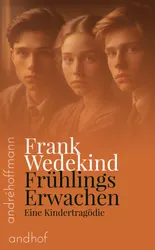
    Frühlings Erwachen : Eine Kindertragödie

    Frank Wedekind

  2. Lyrikalische Bibliothek

    Heinrich Heine, Annette von Droste-Hülshoff, Charles Baudelaire, John Keats, Rainer Maria Rilke, Georg Heym, Wilhelm Busch, Arno Holz, Johann Wolfgang von Goethe, Christian Morgenstern, Joachim Ringelnatz, Georg Trakl, Ludwig Tieck, Stefan Zweig, Hugo von Hoffmannsthal, Edgar Allan Poe, Frank Wedekind, Franz Werfel, Wolfgang Borchert, Karl Kraus, Kurt Tucholsky, Friedrich Nietzsche, Else Lasker-Schüler, Ludwig Kalisch, Jakob van Hoddis, Joseph von Eichendorff, Gotthold Ephraim Lessing

  3. Lyrikalische Lesung Episoden 86-90

    Edgar Allan Poe, Wilhelm Busch, Georg Heym, Frank Wedekind, Franz Werfel

  4. Mine-Haha : Oder über die körperliche Erziehung der jungen Mädchen

    Frank Wedekind

  5. Lyrikalische Lesung Episoden 51-55

    Frank Wedekind, Rainer Maria Rilke, Georg Heym, Charles Baudelaire, Annette von Droste-Hülshoff, Christian Morgenstern, Joachim Ringelnatz, Arno Holz, Wilhelm Busch, Heinrich Heine, Stefan Zweig, Georg Trakl, Friedrich Nietzsche, Ludwig Tieck, Edgar Allan Poe

  6. Lyrikalische Lesung Episoden 41-45

    Karl Kraus, Charles Baudelaire, Rainer Maria Rilke, Wolfgang Borchert, Georg Trakl, Wilhelm Busch, John Keats, Georg Heym, Annette von Droste-Hülshoff, Else Lasker-Schüler, Heinrich Heine, Johann Wolfgang von Goethe, Arno Holz, Friedrich Nietzsche, Stefan Zweig, Ludwig Tieck, Frank Wedekind, Joachim Ringelnatz, Christian Morgenstern

  7. Lyrikalische Lesung Episoden 36-40

    John Keats, Georg Heym, Annette von Droste-Hülshoff, Wilhelm Busch, Joachim Ringelnatz, Arno Holz, Stefan Zweig, Rainer Maria Rilke, Edgar Allan Poe, Ludwig Tieck, Charles Baudelaire, Frank Wedekind, Ludwig Kalisch, Heinrich Heine, Kurt Tucholsky, Franz Werfel, Johann Wolfgang von Goethe

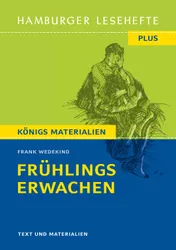
  8. Frühlings Erwachen : Eine Kindertragödie

    Frank Wedekind

  9. #521

    Frühlings Erwachen : Eine Kindertragödie

    Frank Wedekind

  10. Lyrikalische Lesung Episode 89

    Frank Wedekind

  11. Lyrikalikus 237

    Frank Wedekind

  12. Lyrikalikus 217

    Frank Wedekind