Über dieses Buch

Contains Active Table of Contents (HTML) and in the end of book include a bonus link to the free audiobook.

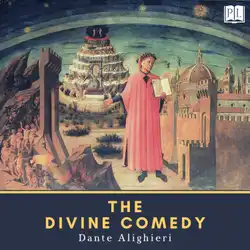
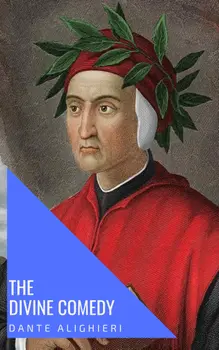
Dante Alighieri was born in Florence, Italy in the middle of the 13th century and what is principally known of him comes from his own writings. One of the world's great literary masterpieces, the "Divine Comedy" is at its heart an allegorical tale regarding man's search for divinity. The work is divided into three sections, "Inferno," "Purgatorio," and "Paradiso," each containing thirty-three cantos. It is the narrative of a journey down through Hell, up the mountain of Purgatory, and through the revolving heavens into the presence of God. In this aspect it belongs to the two familiar medieval literary types of the Journey and the Vision, however Dante intended the work to be more than just simple allegory, layering the narrative with rich historical, moral, political, literal, and anagogical context. In order for the work to be more accessible to the common readers of his day, Dante wrote in the Italian language. This was an uncommon practice at the time for serious literary works, which would traditionally be written in Latin. One of the truly great compositions of all time, the "Divine Comedy" has inspired and influenced readers ever since its original creation.
Starte noch heute mit diesem Buch für CHF 0

  • Hole dir während der Testphase vollen Zugriff auf alle Bücher in der App
  • Keine Verpflichtungen, jederzeit kündbar
Jetzt kostenlos testen
Mehr als 52 000 Menschen haben Nextory im App Store und auf Google Play 5 Sterne gegeben.

  1. 4.0

    La Divine Comédie - Livre Audio

    Dante Alighieri, Livres audio en français

  2. 29. Sept.

    The Divine Comedy

    Dante Alighieri

  3. Neu

    Harvard Classics : The Five-Foot Shelf of Books

    Aesop, Dante Alighieri, Hans Christian Andersen, Augustine of Hippo, Marcus Aurelius, Jane Austen, Francis Bacon, Honoré de Balzac, Francis Beaumont, Bjørnstjerne Bjørnson, Thomas Browne, Robert Browning, John Bunyan, EDMUND BURKE, Robert Burns, Lord Byron, Thomas Carlyle, Benvenuto Cellini, Miguel de Cervantes, Marcus Tullius Cicero, Richard Henry Jr., Charles Darwin, Alphonse Daudet, Thomas Dekker, Charles Dickens, Fyodor Dostoevsky, John Dryden, Charles W. Eliot, George Eliot, Ralph Waldo Emerson, Epictetus, John Fletcher, Theodor Fontane, Benjamin Franklin, Johann Wolfgang Goethe, Oliver Goldsmith, Jacob Grimm, Edward Everett Hale, Bret Harte, Nathaniel Hawthorne, Homer, Victor Hugo, Washington Irving, Henry James, Ben Jonson, Gottfried Keller, Thomas à Kempis, Alexander L. Kielland, Martin Luther, Niccolò Machiavelli, Alessandro Manzoni, Christopher Marlowe, Philip Massinger, Guy De Maupassant, John Stuart Mill, John Milton, Thomas More, William Morris, Alfred de Musset, William Allan Neilson, William Penn, Plato, Pliny the Younger, Plutarch, George Sand, Percy Bysshe Shelley, Richard Brinsley Sheridan, Adam Smith, Laurence Sterne, Theodor Storm, William Makepeace Thackeray, Leo Tolstoy, Ivan Turgenev, Mark Twain, Juan Valera, Virgil, Izaak Walton, John Webster, John Woolman

  4. Neu

    50 Meisterwerke des Mittelalters - Klassiker, die man kennen muss : Beowulf, Rolandslied, 1001 Nacht, Das Gedicht von der Rose, Nibelungenlied, Tristan, Die Edda, Die Göttliche Komödie, Decamerone...

    Marco Polo, Omar Chayyām, Gregor von Tours, Einhard, Anicius Manlius Boethius, Benedikt von Nursia, Gregor der Große, Prokop von Cäsarea, Hildegard von Bingen, Wolfram von Eschenbach, Walther von Vogelweide, Heinrich von Morungen, Gottfried von Straßburg, Heinrich Wittenwiler, Franz von Assisi, Thomas von Aquin, Guillaume de Lorris, Konrad von Würzburg, Dante Alighieri, Giovanni Boccaccio, Geoffrey Chaucer, Johannes von Tepl, Nicolaus von Cues, Sebastian Brant, Hermann Bote, Niccolò Machiavelli, Ludovico Ariosto, Giorgio Vasari, Eusebius, Hieronymus, Agathias, Michael Psellos, Anna Komnena, Abaelard, Augustinus von Hippo

  5. 2.4

    The Divine Comedy

    Dante Alighieri

  6. La Divina Commedia

    Dante Alighieri

  7. 100 obras maestras que debes leer antes de morir

    Francis Scott Fitzgerald, Mary Shelley, Lyman Frank Baum, Edith Nesbit, Dante Alighieri, Jane Austen, Ambrose Bierce, Emily Brontë, Edgar Rice Burroughs, Lewis Carroll, Wilkie Collins, René Descartes, Charles Dickens, Emily Dickinson, Alexandre Dumas, Gustave Flaubert, Benito Pérez Galdós, Johann Wolfgang Goethe, Thomas Hardy, E. T. Hoffmann, Washington Irving, Henry James, James Joyce, Franz Kafka, Gaston Leroux, Federico García Lorca, H.P. Lovecraft, Publio Virgilio Marón, Lucy Maud Montgomery, John William Polidori, Marco Polo, Antoine de Saint-Exupéry, Emilio Salgari, Walter Scott, Mark Twain, Jules Verne

  8. 50 Clásicos que Debes Leer Antes de Morir : Un viaje literario por los tesoros de la literatura universal

    Dante Alighieri, Aristóteles, Jane Austen, Charles Baudelaire, Giovanni Boccaccio, Anne Brontë, C. Collodi, James Fenimore Cooper, Fedor Mikhaïlovitch Dostoïevski, Arthur Conan Doyle, Alexandre Dumas, José de Espronceda, Gustave Flaubert, Sigmund Freud, Benito Pérez Galdós, Kahlil Gibran, Johann Wolfgang Goethe, Victor Hugo, Thomas Hardy, Nathaniel Hawthorne, Vicente Blasco Ibáñez, Washington Irving, James Joyce, Mariano José Larra, Jack London, Federico García Lorca, H.P. Lovecraft, Antonio Machado, Gustav Meyrink, John Stuart Mill, Amado Nervo, Friedrich Nietzsche, Solomon Northup, Alexander Sergeyevich Pushkin, Francisco de Quevedo, Walter Scott, William Shakespeare, Robert Louis Stevenson, Harriet Beecher Stowe, Jonathan Swift, Mark Twain, Miguel De Unamuno, Ramón María Valle-Inclán, Julio Verne, Virginia Woolf

  9. 2.4

    The Divine Comedy

    Dante Alighieri

  10. 3.5
    #3

    Jumalainen näytelmä : Paratiisi

    Dante Alighieri

  11. 4.0
    #2

    Jumalainen näytelmä : Kiirastuli

    Dante Alighieri

  12. 2.4

    The Divine Comedy

    Dante Alighieri