Über dieses Buch

John Galsworthy's "The Little Man: A Farcical Morality in Three Scenes" presents an incisive exploration of societal absurdities through a lens of sharp wit and irony. Crafted in a concise three-act structure, the play intertwines humor with poignant social commentary, reflecting Galsworthy's mastery of farcical narrative. Set against the backdrop of early 20th-century England, it critiques the moral landscape of its time, exposing the contradictions inherent in human nature and social conventions. Galsworthy's deft use of dialogue and character dynamics elevates this work into a compelling reflection on the individual's struggle against societal expectations. John Galsworthy, an acclaimed English novelist and playwright, was deeply influenced by the social injustices he witnessed during the rise of industrialization and the class struggles of his era. His early experiences with the upper-middle-class lifestyle provided him with insights into both privilege and alienation. These themes are aptly encapsulated in "The Little Man," which mirrors Galsworthy's lifelong commitment to examining ethical dilemmas and the human condition through a critical lens, as seen in his more famous works like "The Forsyte Saga." This play is a must-read for those intrigued by the intersection of humor and philosophy in literature. Galsworthy's skillful manipulation of farce encourages readers to reflect on their own societal roles and moral choices. Ideal for enthusiasts of early modern drama or those seeking a deeper understanding of moral complexities, "The Little Man" offers an enriching experience that resonates beyond its theatrical confines.

Starte noch heute mit diesem Buch für CHF 0

  • Hole dir während der Testphase vollen Zugriff auf alle Bücher in der App
  • Keine Verpflichtungen, jederzeit kündbar
Jetzt kostenlos testen
Mehr als 52 000 Menschen haben Nextory im App Store und auf Google Play 5 Sterne gegeben.

Mehr von John Galsworthy

  1. 100 Meisterwerke der englischen Literatur - Klassiker, die man kennen muss (Kommentiert) : Erweiterte Ausgabe. Hamlet, 1984, Ulysses...

    George Orwell, Charles Dickens, Jane Austen, Katherine Mansfield, H.P. Lovecraft, William Wordsworth, John Keats, Percy Bysshe Shelley, Robert Burns, John Milton, William Shakespeare, Christopher Marlowe, Geoffrey Chaucer, Laurence Sterne, Henry Fielding, Mary Shelley, Emily Brontë, Charlotte Brontë, Anne Brontë, William Makepeace Thackeray, George Eliot, D. H. Lawrence, Herman Melville, Thomas Wolfe, Virginia Woolf, Joseph Conrad, Sinclair Lewis, Walt Whitman, Edgar Allan Poe, Oscar Wilde, Jerome K Jerome, Washington Irving, Bram Stoker, H.G. Wells, Daniel Defoe, Lew Wallace, James Fenimore Cooper, Jonathan Swift, Robert Louis Stevenson, Mark Twain, Lewis Carrol, Edward Bulwer-Lytton, F. Scott Fitzgerald, Arthur Conan Doyle, Jack London, Henry David Thoreau, G.K. Chesterton, Edith Wharton, Henry James, Thomas Hardy, Margaret Mitchell, Kate Chopin, Willa Cather, Charlotte Perkins Gilman, James Joyce, John Galsworthy, Francis Hodgson Burnett, Lucy Maud Montgomery, Louisa May Alcott, Rudyard Kipling

  2. 100 Meisterwerke der Weltliteratur - Klassiker die man kennen muss

    Franz Kafka, Fjodor Michailowitsch Dostojewski, Rumi, Platon, Tacitus, Homer, Sigmund Freud, Friedrich Nietzsche, Oswald Spengler, Alfred Adler, Marcus Aurelius, Arthur Schopenhauer, Walt Whitman, Joseph Conrad, Robert Louis Stevenson, Karl May, Alexandre Dumas, James Fenimore Cooper, Arthur Conan Doyle, Edgar Allan Poe, Mary Shelley, O.Henry, Stefan Zweig, Charles Dickens, Jacob Grimm, Wilhelm Grimm, Hans Christian Andersen, Joseph von Eichendorff, Klaus Mann, Johann Wolfgang Goethe, Jane Austen, Emily Brontë, Charlotte Brontë, Else Lasker-Schüler, Heinrich Heine, Herman Melville, Iwan Sergejewitsch Turgenew, Gustav Freytag, Thomas Wolfe, Jonathan Swift, Walter Scott, Nathaniel Hawthorne, Gustave Flaubert, Rainer Maria Rilke, John Galsworthy, Iwan Alexandrowitsch Gontscharow, Oscar Wilde, Lew Wallace, Voltaire, Lewis Carroll, Johanna Spyri, Mark Twain, Selma Lagerlöf, Rudyard Kipling, Jules Verne, Jack London, Miguel de Cervantes, Honoré de Balzac, Emile Zola, Guy De Maupassant, Moliere, Theodor Fontane, Nikolai Gogol, Leo Tolstoi, Anton Pawlowitsch Tschechow, Dante Alighieri, Joseph Roth, Robert Musil, E. T. Hoffmann, Heinrich Mann, Kurt Tucholsky, Heinrich von Kleist, Annette von Droste-Hülshoff, Gottfried Keller, Sophie von Roche, Theodor Storm, William Shakespeare

  3. Neu

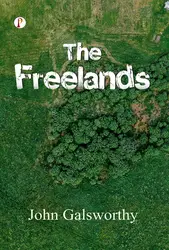
    The Freelands

    John Galsworthy

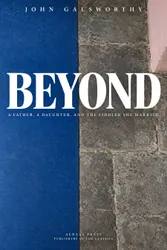
  4. Beyond : A Father, a Daughter, and the Fiddler She Married

    John Galsworthy

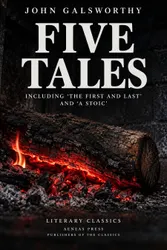
  5. Five Tales : Including 'The First and Last' and 'A Stoic'

    John Galsworthy

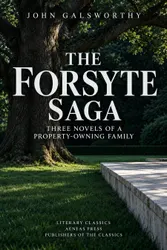
  6. The Forsyte Saga : Three Novels of a Property-Owning Family

    John Galsworthy

  7. The Dark Flower : Spring, Summer and Autumn of One Life

    John Galsworthy

  8. Fraternity : Two Kensingtons

    John Galsworthy

  9. The Freelands : The Land Question

    John Galsworthy

  10. Saint's Progress : Faith in Wartime

    John Galsworthy

  11. The Island Pharisees : The English Conscience

    John Galsworthy

  12. The Country House : A Story of the English Squirearchy

    John Galsworthy