The Pupil

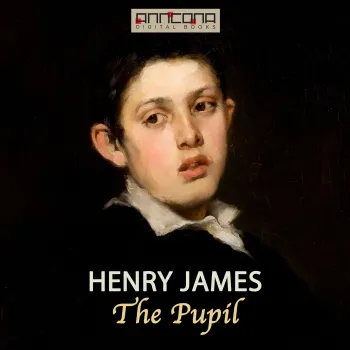
The Pupil is a short story by Henry James, first published in Longman's Magazine in 1891.

It is the emotional story of a precocious young boy growing up in a mendacious and dishonourable family. He befriends his tutor, who is the only adult in his life that he can trust. James presents their relationship with sympathy and insight, and the story reaches what some would consider the status of classical tragedy.

Pemberton, a young American with an Oxford education and out of money, takes a job tutoring Morgan Moreen, the 12-year old son of an American couple living in Europe in a style not quite matched by their income. Mr. and Mrs. Moreen's main purpose in life, it appears, is to win acceptance in the higher circles of French and Italian society, partly in the hope that Morgan's two elder sisters will be taken off their hands.

Morgan, who is highly intelligent, is also precocious and perceptive enough to come to understand his parents' ambitious aimlessness. Something of a crisis develops when the Moreens fail to make good on the salary they've promised Pemberton, and he leaves, needing a steady income. By then, however, the tutor has become sufficiently interested in and attached to his charge to be unwilling to leave Morgan for long, and comes back to join the family when Morgan's mother tells him the boy has fallen ill. There, however, he finds the family shipwreck that he has feared is now taking place, and he is in time to witness it.

Total Running Time (TRT): 1h, 52 min

Henry James, OM (Order of Merit) (1843-1916) was an American-born writer, regarded as one of the key figures of 19th-century literary realism.

He is best known for a number of novels showing Americans encountering Europe and Europeans. His method of writing from a character's point of view allowed him to explore issues related to consciousness and perception, and his style in later works has been compared to impressionist painting. His imaginative use of point of view, interior monologue and unreliable narrators brought a new depth to narrative fiction.

Henry James was nominated for the Nobel Prize in Literature in 1911, 1912, and 1916.
Über dieses Buch

The Pupil is a short story by Henry James, first published in Longman's Magazine in 1891.

It is the emotional story of a precocious young boy growing up in a mendacious and dishonourable family. He befriends his tutor, who is the only adult in his life that he can trust. James presents their relationship with sympathy and insight, and the story reaches what some would consider the status of classical tragedy.

Pemberton, a young American with an Oxford education and out of money, takes a job tutoring Morgan Moreen, the 12-year old son of an American couple living in Europe in a style not quite matched by their income. Mr. and Mrs. Moreen's main purpose in life, it appears, is to win acceptance in the higher circles of French and Italian society, partly in the hope that Morgan's two elder sisters will be taken off their hands.

Morgan, who is highly intelligent, is also precocious and perceptive enough to come to understand his parents' ambitious aimlessness. Something of a crisis develops when the Moreens fail to make good on the salary they've promised Pemberton, and he leaves, needing a steady income. By then, however, the tutor has become sufficiently interested in and attached to his charge to be unwilling to leave Morgan for long, and comes back to join the family when Morgan's mother tells him the boy has fallen ill. There, however, he finds the family shipwreck that he has feared is now taking place, and he is in time to witness it.

Total Running Time (TRT): 1h, 52 min

Henry James, OM (Order of Merit) (1843-1916) was an American-born writer, regarded as one of the key figures of 19th-century literary realism.

He is best known for a number of novels showing Americans encountering Europe and Europeans. His method of writing from a character's point of view allowed him to explore issues related to consciousness and perception, and his style in later works has been compared to impressionist painting. His imaginative use of point of view, interior monologue and unreliable narrators brought a new depth to narrative fiction.

Henry James was nominated for the Nobel Prize in Literature in 1911, 1912, and 1916.
Starte noch heute mit diesem Buch für CHF 0

  • Hole dir während der Testphase vollen Zugriff auf alle Bücher in der App
  • Keine Verpflichtungen, jederzeit kündbar
Jetzt kostenlos testen
Mehr als 52 000 Menschen haben Nextory im App Store und auf Google Play 5 Sterne gegeben.

  1. 50 Klassiker des Feminismus - Bücher, die man kennen muss : Das Erwachen, Lelia, Jane Eyre, Neue Amazonia, Die gelbe Tapete, Mrs Dalloway, Kleine Frauen, Verteidigung der Rechte der Frau, Meine brillante Karriere

    Kate Chopin, Charlotte Perkins Gilman, Virginia Woolf, Charlotte Brontë, George Sand, Louisa May Alcott, Jane Austen, L.M. Montgomery, Victor Hugo, Daniel Defoe, Nathaniel Hawthorne, Wilhelmine von Hillern, Adalbert Stifter, Luise Ahlborn, George Eliot, Lou Andreas-Salomé, D. H. Lawrence, Henry James, Margaret Mitchell, Edith Wharton, Miles Franklin, Willa Cather, Leo Tolstoi, Henrik Ibsen, Elizabeth Gaskell, Nikolai Semjonowitsch Leskow, Theodore Dreiser, Elizabeth von Arnim, Colette, Emmeline Pankhurst, Louise Aston, Bertha von Suttner, Hedwig Dohm, Mary Wollstonecraft, Elizabeth Cady Stanton, Matilda Joslyn Gage, John Stuart Mill, Thomas Hardy, Sinclair Lewis, Elizabeth Burgoyne Corbett, Anne Brontë

  2. Porträt einer Dame : Ausgabe in neuer Übersetzung und Rechtschreibung

    Henry James

  3. Der Lügner

    Henry James

  4. The Rise of Deathwatch : A Journey Through Gothic Horror: Explore 19th Century Dark Romance and Haunting Victorian Mysteries

    Horace Walpole, William Thomas Beckford, Eliza Parsons, William Godwin, Ann Radcliffe, Matthew Gregory Lewis, Charles Brockden Brown, Jane Austen, Mary Shelley, Thomas love Peacock, Edgar Allan Poe, John William Polidori, Washington Irving, Charles Robert Maturin, James Hogg, Victor Hugo, Frederick Marryat, Nikolai Gogol, Charlotte Brontë, Emily Brontë, James Malcolm Rymer, Thomas Peckett Prest, Nathaniel Hawthorne, George Eliot, Wilkie Collins, Robert Louis Stevenson, Charles Dickens, Joseph Sheridan Fanu, Arthur Conan Doyle, Oscar Wilde, Guy De Maupassant, Anna Katharine Green, Charlotte Perkins Gilman, Arthur Machen, George MacDonald, John Meade Falkner, H.G. Wells, Richard Marsh, Henry James, Bram Stoker, W. W. Jacobs, Robert Hugh Benson, Gaston Leroux, Théophile Gautier, William Hope Hodgson, Grant Allen

  5. Henry James Sampler #1: 10 books by Henry James

    Henry James

  6. Porträt einer jungen Dame

    Henry James

  7. Neu

    100 obras maestras que debes leer antes de morir

    Francis Scott Fitzgerald, Mary Shelley, Lyman Frank Baum, Edith Nesbit, Dante Alighieri, Jane Austen, Ambrose Bierce, Emily Brontë, Edgar Rice Burroughs, Lewis Carroll, Wilkie Collins, René Descartes, Charles Dickens, Emily Dickinson, Alexandre Dumas, Gustave Flaubert, Benito Pérez Galdós, Johann Wolfgang Goethe, Thomas Hardy, E. T. Hoffmann, Washington Irving, Henry James, James Joyce, Franz Kafka, Gaston Leroux, Federico García Lorca, H.P. Lovecraft, Publio Virgilio Marón, Lucy Maud Montgomery, John William Polidori, Marco Polo, Antoine de Saint-Exupéry, Emilio Salgari, Walter Scott, Mark Twain, Jules Verne

  8. 3.4

    The Turn of the Screw

    Henry James

  9. Neu
    5.0

    The Beast in the Jungle

    Henry James

  10. Neu
    2.0

    The Portrait of a Lady

    Henry James

  11. Roderick Hudson

    Henry James

  12. Neu

    Confidence

    Henry James