The Tempest

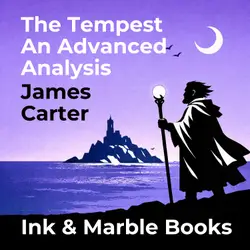
"THE TEMPEST" is Shakespeare's last book. The story Prospero relates is that he is the rightful Duke of Milan and that his younger brother, Antonio, betrayed him, seizing his title and property. Twelve years earlier, Prospero and Miranda were put out to sea in little more than a raft. Miraculously, they both survived and arrived safely on this island, where Prospero learned to control the magic that he now uses to manipulate everyone on the island. Upon his arrival, Prospero rescued a sprite, Ariel, who had been imprisoned by the witch Sycorax. Ariel wishes to be free and his freedom has been promised within two days. The last inhabitant of the island is the child of Sycorax and the devil: Caliban, whom Prospero has enslaved. Caliban is a natural man, uncivilized and wishing only to have his island returned to him to that he can live alone in peace. Soon the royal party from the ship is cast ashore and separated into three groups. The king's son, Ferdinand, is brought to Prospero, where he sees Miranda, and the two fall instantly in love. Meanwhile, Alonso, the king of Naples, and the rest of his party have come ashore on another part of the island. Alonso fears that Ferdinand is dead and grieves for the loss of his son. Antonio, Prospero's younger brother, has also been washed ashore with the king's younger brother, Sebastian. Antonio easily convinces Sebastian that Sebastian should murder his brother and seize the throne for himself. This plot to murder Alonso is similar to Antonio's plot against his own brother, Prospero, 12 years earlier. Another part of the royal party — the court jester and the butler — has also come ashore. Trinculo and Stefano each stumble upon Caliban, and each immediately sees a way to make money by exhibiting Caliban as a monster recovered from this uninhabited island. Stefano has come ashore in a wine cask, and soon Caliban, Trinculo, and Stefano are drunk. While drinking, Caliban hatches a plot to murder Prospero and enrolls his two new acquaintances as accomplices. Ariel is listening, however, and reports the plot to Prospero. Next, Prospero stages a masque to celebrate the young couple's betrothal, with goddesses and nymphs entertaining the couple with singing and dancing. While Ferdinand and Miranda have been celebrating their love, Alonso and the rest of the royal party have been searching for the king's son. Exhausted from the search and with the king despairing of ever seeing his son alive, Prospero has ghosts and an imaginary banquet brought before the king's party. A god-like voice accuses Antonio, Alonso, and Sebastian of their sins, and the banquet vanishes. The men are all frightened, and Alonso, Antonio, and Sebastian run away. Prospero punishes Caliban, Trinculo, and Stefano with a run through a briar patch and swim in a scummy pond. Having accomplished what he set out to do, Prospero has the king's party brought in. Prospero is clothed as the rightful Duke of Milan, and when the spell has been removed, Alonso rejects all claims to Prospero's dukedom and apologizes for his mistakes. Within moments, Prospero reunites the king with his son, Ferdinand. Alonso is especially pleased to learn of Miranda's existence and that Ferdinand will marry her. Prospero then turns to his brother, Antonio, who offers no regrets or apology for his perfidy. Nevertheless, Prospero promises not to punish Antonio as a traitor. When Caliban is brought in, Caliban tells Prospero that he has learned his lesson. His two co-conspirators, Trinculo and Stefano, will be punished by the king. Soon, the entire party retires to Prospero's cell to celebrate and await their departure home. Only Prospero is left on stage. In a final speech, Prospero tells the audience that only with their applause will he be able to leave the island with the rest of the party. Prospero leaves the stage to the audience's applause.

Über dieses Buch

"THE TEMPEST" is Shakespeare's last book. The story Prospero relates is that he is the rightful Duke of Milan and that his younger brother, Antonio, betrayed him, seizing his title and property. Twelve years earlier, Prospero and Miranda were put out to sea in little more than a raft. Miraculously, they both survived and arrived safely on this island, where Prospero learned to control the magic that he now uses to manipulate everyone on the island. Upon his arrival, Prospero rescued a sprite, Ariel, who had been imprisoned by the witch Sycorax. Ariel wishes to be free and his freedom has been promised within two days. The last inhabitant of the island is the child of Sycorax and the devil: Caliban, whom Prospero has enslaved. Caliban is a natural man, uncivilized and wishing only to have his island returned to him to that he can live alone in peace. Soon the royal party from the ship is cast ashore and separated into three groups. The king's son, Ferdinand, is brought to Prospero, where he sees Miranda, and the two fall instantly in love. Meanwhile, Alonso, the king of Naples, and the rest of his party have come ashore on another part of the island. Alonso fears that Ferdinand is dead and grieves for the loss of his son. Antonio, Prospero's younger brother, has also been washed ashore with the king's younger brother, Sebastian. Antonio easily convinces Sebastian that Sebastian should murder his brother and seize the throne for himself. This plot to murder Alonso is similar to Antonio's plot against his own brother, Prospero, 12 years earlier. Another part of the royal party — the court jester and the butler — has also come ashore. Trinculo and Stefano each stumble upon Caliban, and each immediately sees a way to make money by exhibiting Caliban as a monster recovered from this uninhabited island. Stefano has come ashore in a wine cask, and soon Caliban, Trinculo, and Stefano are drunk. While drinking, Caliban hatches a plot to murder Prospero and enrolls his two new acquaintances as accomplices. Ariel is listening, however, and reports the plot to Prospero. Next, Prospero stages a masque to celebrate the young couple's betrothal, with goddesses and nymphs entertaining the couple with singing and dancing. While Ferdinand and Miranda have been celebrating their love, Alonso and the rest of the royal party have been searching for the king's son. Exhausted from the search and with the king despairing of ever seeing his son alive, Prospero has ghosts and an imaginary banquet brought before the king's party. A god-like voice accuses Antonio, Alonso, and Sebastian of their sins, and the banquet vanishes. The men are all frightened, and Alonso, Antonio, and Sebastian run away. Prospero punishes Caliban, Trinculo, and Stefano with a run through a briar patch and swim in a scummy pond. Having accomplished what he set out to do, Prospero has the king's party brought in. Prospero is clothed as the rightful Duke of Milan, and when the spell has been removed, Alonso rejects all claims to Prospero's dukedom and apologizes for his mistakes. Within moments, Prospero reunites the king with his son, Ferdinand. Alonso is especially pleased to learn of Miranda's existence and that Ferdinand will marry her. Prospero then turns to his brother, Antonio, who offers no regrets or apology for his perfidy. Nevertheless, Prospero promises not to punish Antonio as a traitor. When Caliban is brought in, Caliban tells Prospero that he has learned his lesson. His two co-conspirators, Trinculo and Stefano, will be punished by the king. Soon, the entire party retires to Prospero's cell to celebrate and await their departure home. Only Prospero is left on stage. In a final speech, Prospero tells the audience that only with their applause will he be able to leave the island with the rest of the party. Prospero leaves the stage to the audience's applause.

Starte noch heute mit diesem Buch für CHF 0

  • Hole dir während der Testphase vollen Zugriff auf alle Bücher in der App
  • Keine Verpflichtungen, jederzeit kündbar
Jetzt kostenlos testen
Mehr als 52 000 Menschen haben Nextory im App Store und auf Google Play 5 Sterne gegeben.

  1. 100 Klassiker der Romantik - Meisterwerke, die man kennen muss : Epische Liebesdramen und große Erwartungen in zeitlosen Geschichten

    Jane Austen, Louisa May Alcott, D. H. Lawrence, Fjodor Dostojewski, William Shakespeare, Hedwig Courths-Mahler, Frances Burney, Charlotte Brontë, Alexandre Dumas, Margaret Mitchell, Charles Dickens, L.M. Montgomery, Eugenie Marlitt, Wilhelmine Heimburg, Elisabeth Bürstenbinder, Stendhal, Johann Wolfgang von Goethe, Walter Scott, Guy De Maupassant, Victor Hugo, George Sand, Leo Tolstoi, Gabriele D’Annunzio, Rudyard Kipling, Gustave Flaubert, Nathaniel Hawthorne, Jean-Jacques Rousseau, Bernardin de Saint-Pierre, F. Scott Fitzgerald, Prosper Mérimée, Edith Wharton, Lena Christ, François-René de Chateaubriand, Stefan Zweig, Alexander Sergejewitsch Puschkin, Ida Boy-Ed, Arthur Schnitzler, Anatole France, Johanna Spyri, George Eliot, Gaston Leroux, Nataly von Eschstruth, Gottfried von Straßburg, Sophie Mereau, Caroline von Wolzogen, Benedikte Naubert, Henry De Vere Stacpoole, Levin Schücking

  2. Die größten Klassiker der Lyrik : Die schönsten Gedichte der Weltliteratur: Bhagavadgita, Duineser Elegien, Grashalme, Venus und Adonis, Das verlorene Paradies, West-östlicher Divan

    Lord Byron, Rainer Maria Rilke, Giacomo Leopardi, Walt Whitman, Dschalal ad-Din Muhammad Rumi, Heinrich Heine, William Shakespeare, John Milton, Friedrich Schiller, Percy Bysshe Shelley, Edgar Allan Poe, Johann Wolfgang Goethe, Gottfried von Straßburg, Victor Hugo, Dante Alighieri, William Wordsworth, Homer, Vergil, Ovid, Georg Herwegh, Giosuè Carducci, Omar Chayyām, Alphonse de Lamartine, Stéphane Mallarmé, Christian Morgenstern, Joachim Ringelnatz, Annette von Droste-Hülshoff, Alexander Sergejewitsch Puschkin, Robert Burns, Charles Baudelaire

  3. 3.0
    #24

    William Shakespeare: Der Kaufmann von Venedig : Eine Komödie. Ungekürzt gelesen.

    William Shakespeare

  4. England erzählt : Die große Hörbuch Box der britischen Literatur

    William Shakespeare, Charles Dickens, Arthur Conan Doyle

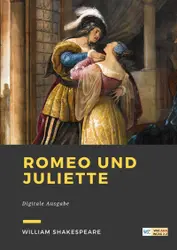
  5. Romeo und Julia

    William Shakespeare

  6. 13. Nov.

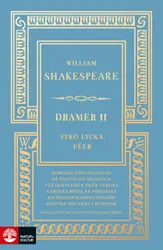
    Dramer II. Strö lycka, féer : Komiska förväxlingar, Så tuktas en argbigga, Två gentlemän från Verona, Kärleks möda är förgäves, En midsommarnattsdröm, Muntra fruarna i Windsor.

    William Shakespeare

  7. Neu

    50 Clásicos que Debes Leer Antes de Morir : Un viaje literario por los tesoros de la literatura universal

    Dante Alighieri, Aristóteles, Jane Austen, Charles Baudelaire, Giovanni Boccaccio, Anne Brontë, C. Collodi, James Fenimore Cooper, Fedor Mikhaïlovitch Dostoïevski, Arthur Conan Doyle, Alexandre Dumas, José de Espronceda, Gustave Flaubert, Sigmund Freud, Benito Pérez Galdós, Kahlil Gibran, Johann Wolfgang Goethe, Johann Wolfgang von Goethe, Victor Hugo, Thomas Hardy, Nathaniel Hawthorne, Vicente Blasco Ibáñez, Washington Irving, James Joyce, Mariano José de Larra, Jack London, Federico García Lorca, H.P. Lovecraft, Antonio Machado, Gustav Meyrink, John Stuart Mill, Amado Nervo, Friedrich Nietzsche, Solomon Northup, Alexander Sergeyevich Pushkin, Francisco de Quevedo, Walter Scott, William Shakespeare, Robert Louis Stevenson, Harriet Beecher Stowe, Jonathan Swift, Mark Twain, Miguel De Unamuno, Ramón María del Valle-Inclán, Julio Verne, Virginia Woolf

  8. Neu

    William Shakespeare: Meisterwerke der Erzählkunst : Klassiker der Weltliteratur: Dramen, Komödien und Sonette

    William Shakespeare

  9. Neu

    The Big Book of Christmas

    Louisa May Alcott, O.Henry, Mark Twain, Beatrix Potter, Charles Dickens, William Shakespeare, Harriet Beecher Stowe, Emily Dickinson, Robert Louis Stevenson, Rudyard Kipling

  10. Neu
    4.5
    #10

    As You Like It

    William Shakespeare

  11. Neu

    William Shakespeare: Hamlet. A drama. : Unabridged version with stage directions

    William Shakespeare

  12. Neu
    4.0

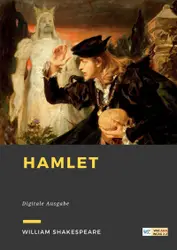
    Hamlet

    William Shakespeare