Über dieses Buch

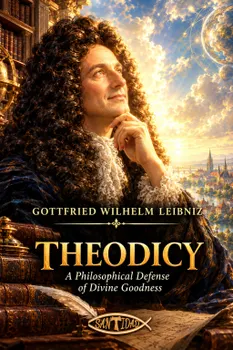
# Theodicy

### Gottfried Wilhelm Leibniz

**If God is perfectly good, why does evil exist? And if this is the best of all possible worlds, how can we explain its suffering?**

In *Theodicy*, the great philosopher Gottfried Wilhelm Leibniz confronts one of humanity's most profound and enduring mysteries: the relationship between divine goodness, human freedom, and the existence of evil.

First published in 1710, this landmark work challenges readers to reconsider the nature of suffering, the limits of human understanding, and the possibility that even a seemingly imperfect universe may belong to a greater order beyond our comprehension.

Through a remarkable synthesis of reason, theology, and metaphysics, Leibniz develops his famous vision of the "best of all possible worlds," exploring whether a perfectly wise and benevolent God could have created anything better. Along the way, he confronts the difficult questions of moral responsibility, free will, divine justice, and the origins of human suffering.

Neither a simple reassurance nor an easy answer, *Theodicy* invites readers into a profound intellectual journey where faith meets reason and the darkest questions of existence demand their fullest examination.

**A timeless philosophical masterpiece that dares to ask whether the world's imperfections can coexist with divine perfection—and challenges us to rethink everything we believe about God, freedom, and the meaning of existence.**

Starte noch heute mit diesem Buch für CHF 0

  • Hole dir während der Testphase vollen Zugriff auf alle Bücher in der App
  • Keine Verpflichtungen, jederzeit kündbar
Jetzt kostenlos testen
Mehr als 52 000 Menschen haben Nextory im App Store und auf Google Play 5 Sterne gegeben.

  1. 50 citations de Leibniz

    Gottfried Wilhelm Leibniz

  2. 1800 Citations de philosophes

    Aristote, Épicure, Platon, Thalès de Milet, – Socrate, Protagoras, Anaximandre, Épictète, Héraclite, Marc Aurèle, René Descartes, Michel de Montaigne, Alexis de Tocqueville, Voltaire, Charles De Montesquieu, Jean-Jacques Rousseau, Emmanuel Kant, Hannah Arendt, Gottfried Wilhelm Leibniz, Georg Wilhelm Friedrich Hegel, Friedrich Nietzsche, Arthur Schopenhauer, David Hume, John Locke, Francis Bacon, Thomas Hobbes, Thomas More, Confucius, Érasme, Lao Tseu, Baruch Spinoza, Søren Kierkegaard, Nicolas Machiavel, Thomas d'Aquin, Henry David Thoreau

  3. 300 citations de philosophes allemands

    Emmanuel Kant, Hannah Arendt, Gottfried Wilhelm Leibniz, Georg Wilhelm Friedrich Hegel, Friedrich Nietzsche, Arthur Schopenhauer

  4. The Monadology

    Gottfried Wilhelm Leibniz

  5. Comprendre Leibniz

    Gottfried Wilhelm Leibniz

  6. Monadologie (Kommentiert) : Erweiterte Ausgabe. Metaphysik der Monaden, prästabilierte Harmonie und rationalistische Weltordnung der Frühaufklärung

    Gottfried Wilhelm Leibniz

  7. 50 Meisterwerke der Philosophie : Metaphysik, Das Gastmahl, Bhagavadgita, Tractatus logico-philosophicus, Kritik der reinen Vernunft, Also sprach Zarathustra, Selbstbetrachtungen von Marcus Aurelius

    Ludwig Wittgenstein, Edmund Husserl, Karl Marx, Søren Kierkegaard, Friedrich Nietzsche, Ralph Waldo Emerson, John Stuart Mill, Georg Wilhelm Hegel, Friedrich Schelling, Johann Gottlieb Fichte, Immanuel Kant, John Locke, Montesquieu, Jean-Jacques Rousseau, David Hume, Gottfried Wilhelm Leibniz, Baruch Spinoza, - Konfuzius, Lao Tse, Platon, Xenophon, - Aristoteles, Marcus Tullius Cicero, Seneca, Epiktet, Marc Aurel, Plotin, Thomas von Aquin, Nicolaus von Cues, - Erasmus von Rotterdam, Niccolò Machiavelli, Tommaso Campanella, Martin Luther, Giordano Bruno, Samuel von Pufendorf, Abbé Castel Saint-Pierre, Michel de Montaigne, René Descartes, Francis Bacon, Blaise Pascal

  8. Die Theodicee : Bereicherte Ausgabe. Abhandlungen über die Theodizee von der Güte Gottes, der Freiheit des Menschen und dem Ursprung des Bösen

    Gottfried Wilhelm Leibniz

  9. Die größten Klassiker der Philosophie (Kommentiert) : Erweiterte Ausgabe. Also sprach Zarathustra, Utopia, Phänomenologie des Geistes, Neues Organon, Selbstbetrachtungen, Das Gastmahl, Nikomachische Ethik

    Immanuel Kant, Søren Kierkegaard, Edmund Husserl, Ludwig Wittgenstein, Friedrich Nietzsche, - Konfuzius, Platon, Xenophon, - Aristoteles, Lao Tse, Marcus Tullius Cicero, Marcus Aurelius, Plotin, Thomas von Aquin, Niccolò Machiavelli, Thomas Morus, Giordano Bruno, Michel de Montaigne, René Descartes, Francis Bacon, Blaise Pascal, Baruch Spinoza, Gottfried Wilhelm Leibniz, David Hume, Jean-Jacques Rousseau, Friedrich Schelling, John Locke, Georg Wilhelm Hegel, John Stuart Mill, Karl Marx

  10. Metaphysik : Erweiterte Ausgabe. Entdeckungsreise durch Existenz und Realität: Von klassischen Ontologien zu ethischen Paradigmen

    Platon, - Aristoteles, Plotin, Thomas von Aquin, René Descartes, Baruch Spinoza, Thomas Hobbes, Immanuel Kant, Gottfried Wilhelm Leibniz, Friedrich Wilhelm Schelling, Georg Wilhelm Hegel, Arthur Schopenhauer, Moses Mendelssohn, Friedrich Nietzsche, Rudolf Steiner

  11. Meisterwerke der Weltphilosophie (Kommentiert) : Erweiterte Ausgabe. Das Gastmahl, Nikomachische Ethik, Also sprach Zarathustra, Utopia, Phänomenologie des Geistes, Neues Organon, Selbstbetrachtungen

    Immanuel Kant, Søren Kierkegaard, Edmund Husserl, Ludwig Wittgenstein, Friedrich Nietzsche, - Konfuzius, Platon, Xenophon, - Aristoteles, Lao Tse, Marcus Tullius Cicero, Marcus Aurelius, Plotin, Thomas von Aquin, Niccolò Machiavelli, Thomas Morus, Giordano Bruno, Michel de Montaigne, René Descartes, Francis Bacon, Blaise Pascal, Baruch Spinoza, Gottfried Wilhelm Leibniz, David Hume, Jean-Jacques Rousseau, Friedrich Schelling, John Locke, Georg Wilhelm Hegel, John Stuart Mill, Karl Marx