Über dieses Buch

What would a truly ideal society look like?

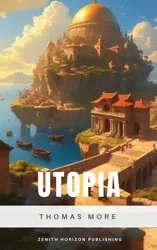
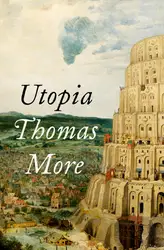
In Utopia, Thomas More presents a fascinating vision of an imagined society designed around principles of reason, justice, communal responsibility, and social order. Written as a fictional dialogue and travel narrative, the work explores what society might look like if it were organized according to radically different principles.

More's imagined island of Utopia provides a framework for examining government, private property, wealth, education, religion, law, labor, family life, and social equality. By contrasting Utopia with the political and social conditions of his own time, More raises challenging questions about how societies are governed and what makes a community just.

The work blends political philosophy, social criticism, satire, and imaginative fiction, leaving readers to consider whether the perfect society is actually possible—or whether every ideal contains its own contradictions.

First published in 1516, Utopia became one of the foundational works of Western political thought and gave the modern world the word "utopia."

For readers interested in political philosophy, social reform, ideal societies, classical literature, history, government, and philosophical fiction, Utopia remains a thought-provoking and influential classic.

Enter Thomas More's imagined perfect society and question the foundations of your own. Read Utopia today and explore enduring ideas about justice, government, equality, property, and the ideal society.
Starte noch heute mit diesem Buch für CHF 0

  • Hole dir während der Testphase vollen Zugriff auf alle Bücher in der App
  • Keine Verpflichtungen, jederzeit kündbar
Jetzt kostenlos testen
Mehr als 52 000 Menschen haben Nextory im App Store und auf Google Play 5 Sterne gegeben.

Mehr von Thomas More

  1. Neu
    3.3

    Utopia

    Thomas More

  2. 3.3

    Utopia

    Thomas More

  3. Harvard Classics : The Five-Foot Shelf of Books

    Aesop, Dante Alighieri, Hans Christian Andersen, Augustine of Hippo, Marcus Aurelius, Jane Austen, Francis Bacon, Honoré de Balzac, Francis Beaumont, Bjørnstjerne Bjørnson, Thomas Browne, Robert Browning, John Bunyan, EDMUND BURKE, Robert Burns, Lord Byron, Thomas Carlyle, Benvenuto Cellini, Miguel de Cervantes, Marcus Tullius Cicero, Richard Henry Jr., Charles Darwin, Alphonse Daudet, Thomas Dekker, Charles Dickens, Fyodor Dostoevsky, John Dryden, Charles W. Eliot, George Eliot, Ralph Waldo Emerson, Epictetus, John Fletcher, Theodor Fontane, Benjamin Franklin, Johann Wolfgang Goethe, Oliver Goldsmith, Jacob Grimm, Edward Everett Hale, Bret Harte, Nathaniel Hawthorne, Homer, Victor Hugo, Washington Irving, Henry James, Ben Jonson, Gottfried Keller, Thomas à Kempis, Alexander L. Kielland, Martin Luther, Niccolò Machiavelli, Alessandro Manzoni, Christopher Marlowe, Philip Massinger, Guy De Maupassant, John Stuart Mill, John Milton, Thomas More, William Morris, Alfred de Musset, William Allan Neilson, William Penn, Plato, Pliny the Younger, Plutarch, George Sand, Percy Bysshe Shelley, Richard Brinsley Sheridan, Adam Smith, Laurence Sterne, Theodor Storm, William Makepeace Thackeray, Leo Tolstoy, Ivan Turgenev, Mark Twain, Juan Valera, Virgil, Izaak Walton, John Webster, John Woolman

  4. 3.3

    Utopia

    Thomas More

  5. 3.3

    Utopia

    Thomas More

  6. 3.3

    Utopia

    Thomas More

  7. 3.3

    Utopia

    Thomas More

  8. 3.3

    Utopia

    Thomas More

  9. 3.3

    Utopia

    Thomas More

  10. 3.3

    Utopia

    Thomas More

  11. Utopia : A Visionary Blueprint for Ideal Society

    Thomas More