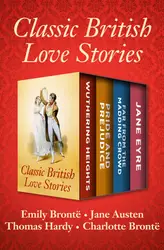
Bringing together Wuthering Heights and Jane Eyre, this volume presents two defining achievements of nineteenth-century English fiction, united by their fascination with passion, moral autonomy, social constraint, and the haunted landscapes of memory and desire. Gothic intensity, psychological realism, romance, spiritual inquiry, and social critique converge in narratives that transformed the Victorian novel. From the tempestuous moors to the oppressive interiors of orphanage, manor, and madhouse, the collection reveals how domestic spaces become arenas of power, rebellion, and self-making. Charlotte and Emily Brontë, writing from the relative isolation of Haworth yet in urgent dialogue with Romanticism, evangelical culture, gender ideology, and emerging Victorian realism, reshaped the possibilities of women's authorship. Their fiction challenges inherited assumptions about class, marriage, education, madness, and female agency, while also expanding the novel's emotional and formal range. Read together, these works illuminate the Brontës' shared imaginative world as well as their strikingly distinct narrative methods and moral visions. This collection is ideal for readers seeking a concentrated encounter with the richness of the Brontë legacy. It offers students, scholars, and general readers alike an opportunity to compare two masterpieces that speak across and against one another. Within a single volume, the reader finds a powerful dialogue between passion and conscience, isolation and community, resistance and longing.
This enriched edition has been carefully crafted to add value to your reading experience.
- An Introduction draws the threads together, discussing why these diverse authors and texts belong in one collection.
- Historical Context explores the cultural and intellectual currents that shaped these works, offering insight into the shared (or contrasting) eras that influenced each writer.
- A combined Synopsis (Selection) briefly outlines the key plots or arguments of the included pieces, helping readers grasp the anthology's overall scope without giving away essential twists.
- A collective Analysis highlights common themes, stylistic variations, and significant crossovers in tone and technique, tying together writers from different backgrounds.
- Reflection questions encourage readers to compare the different voices and perspectives within the collection, fostering a richer understanding of the overarching conversation.