Über dieses Buch

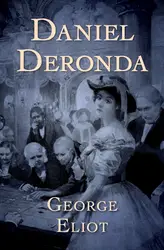
Daniel Deronda George Eliot - Daniel Deronda is a novel by George Eliot, first published in 1876. The book contains two main strains of plot, united by the title character. The novel begins in late August 1865 with the meeting of Daniel Deronda and Gwendolen Harleth in the fictional town of Leubronn, Germany. Daniel finds himself attracted to, but wary of, the beautiful, stubborn, and selfish Gwendolen, whom he sees losing all her winnings in a game of roulette. The next day, Gwendolen receives a letter from her mother telling her that the family is financially ruined and asking her to come home. In despair at losing all her money, Gwendolen pawns a necklace and debates gambling again to make her fortune. In a fateful moment, however, her necklace is returned to her by a porter, and she realises that Daniel saw her pawn the necklace and redeemed it for her. From this point, the plot breaks off into two separate flashbacks, one which gives us the history of Gwendolen Harleth and one of Daniel Deronda.

Starte noch heute mit diesem Buch für CHF 0

  • Hole dir während der Testphase vollen Zugriff auf alle Bücher in der App
  • Keine Verpflichtungen, jederzeit kündbar
Jetzt kostenlos testen
Mehr als 52 000 Menschen haben Nextory im App Store und auf Google Play 5 Sterne gegeben.

Mehr von George Eliot

  1. 50 Masterpieces you have to read before you die vol: 1

    Louisa May Alcott, Jane Austen, Joseph Conrad, D. H. Lawrence, George Eliot, Leo Tolstoy, James Joyce, Charles Dickens, Bram Stoker, Oscar Wilde, Honoré de Balzac, Edgar Rice Burroughs, Anne Brontë, Charlotte Brontë, Emily Brontë, Lewis Carroll, Willa Cather, Miguel de Cervantes, E. E. Cummings, Fyodor Dostoyevsky, Daniel Defoe, Arthur Conan Doyle, Alexandre Dumas, Gustave Flaubert, Henry James, Victor Hugo

  2. Die größten Heldinnen der Literatur (50 Romane in einem Band) : 50 Romane über weibliche Selbstbehauptung, Bildung und gesellschaftliche Grenzen

    Charlotte Brontë, Jane Austen, Louisa May Alcott, Leo Tolstoi, Virginia Woolf, Thomas Hardy, Sinclair Lewis, Hedwig Dohm, Charlotte Perkins Gilman, Elizabeth Burgoyne Corbett, Daniel Defoe, Anne Brontë, L.M. Montgomery, Victor Hugo, Wilhelmine von Hillern, Adalbert Stifter, Luise Ahlborn, George Eliot, Lou Andreas-Salomé, Stefan Zweig, D. H. Lawrence, Henry James, Margaret Mitchell, Edith Wharton, Miles Franklin, Willa Cather, Elizabeth Gaskell, Nikolai Semjonowitsch Leskow, Theodore Dreiser, Elizabeth von Arnim, Colette, Honoré de Balzac, William Makepeace Thackeray, Gustave Flaubert, Emile Zola, Theodor Fontane, Ada Langworthy Collier, Joseph Sheridan Fanu, Johanna Schopenhauer, Nathaniel Hawthorne, Charles Dickens

  3. 50 Klassiker des Feminismus - Bücher, die man kennen muss : Schlüsseltexte zu Frauenbildung, Ehekritik und Selbstbestimmung

    Kate Chopin, Charlotte Perkins Gilman, Virginia Woolf, Charlotte Brontë, George Sand, Louisa May Alcott, Jane Austen, L.M. Montgomery, Victor Hugo, Daniel Defoe, Nathaniel Hawthorne, Wilhelmine von Hillern, Adalbert Stifter, Luise Ahlborn, George Eliot, Lou Andreas-Salomé, D. H. Lawrence, Henry James, Margaret Mitchell, Edith Wharton, Miles Franklin, Willa Cather, Leo Tolstoi, Henrik Ibsen, Elizabeth Gaskell, Nikolai Semjonowitsch Leskow, Theodore Dreiser, Elizabeth von Arnim, Colette, Emmeline Pankhurst, Louise Aston, Bertha von Suttner, Hedwig Dohm, Mary Wollstonecraft, Elizabeth Cady Stanton, Matilda Joslyn Gage, John Stuart Mill, Thomas Hardy, Sinclair Lewis, Elizabeth Burgoyne Corbett, Anne Brontë

  4. 5. Nov.
    4.8

    Middlemarch

    George Eliot

  5. Neu
    4.3

    Silas Marner

    George Eliot

  6. Bestbewertet
    4.8

    Middlemarch

    George Eliot

  7. Bestbewertet
    4.8

    Middlemarch

    George Eliot

  8. Neu

    Middlemarch : A Study of Provincial Life

    George Eliot

  9. Neu

    Middlemarch : A Study of Provincial Life

    George Eliot

  10. Neu

    Scenes of Clerical Life : Three Tales of a Midland Parish

    George Eliot

  11. Neu

    The Mill on the Floss : A Brother, a Sister and the River

    George Eliot

  12. Neu

    Felix Holt, the Radical : An English Election and a Disputed Estate

    George Eliot